

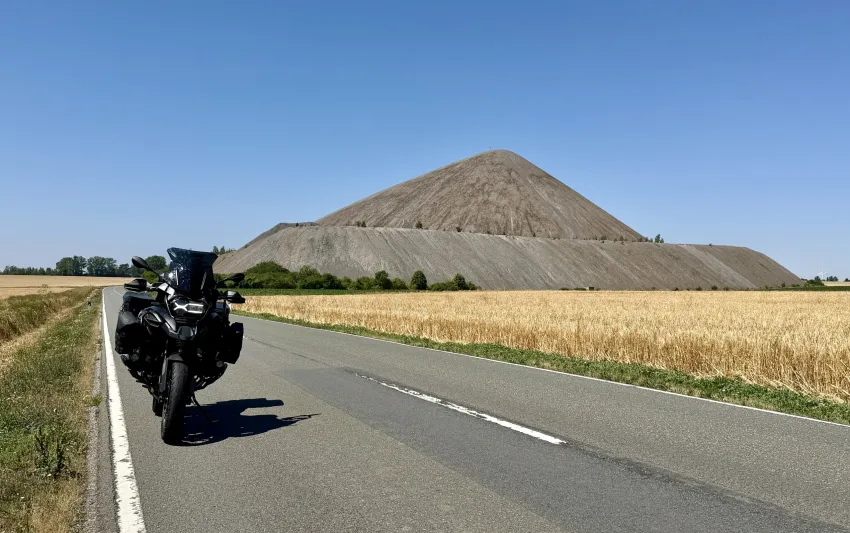
Germany Bound – Naps, Empty Lakes & Riding Straight Past the Sightseeing
Day 7 to Day 9 – Bad Pyrmont, Edersee, Melsungen and East into the Former GDR
08.07.26 – 10.07.26
There are mornings on a motorcycle trip when you wake up, jump out of bed, throw open the curtains and think:
“Right. Let’s ride!”
And then there are mornings when your body opens one eye and quietly says:
“Mate… absolutely not.”
Today was definitely the second kind.
After several days on the road, I woke up in Bad Pyrmont with very little desire to pack the bike, squeeze myself back into motorcycle gear and continue the journey.
Normally I’m quite good at pushing on.
Another road.
Another town.
Another 250 kilometres.
Another hotel.
That’s how motorcycle trips work.
Except sometimes they shouldn’t.
Over the years I’ve learned one fairly simple rule:
Listen to your body.
If everything inside you is saying you need another day, then perhaps riding several hundred kilometres on a 250-kilogram motorcycle isn’t the smartest response.
So I did something extremely adventurous.
I booked another night.
Day 7 – Bad Pyrmont
08.07.26
The Hotel Fürstenhof got another day of my business.
The GS stayed exactly where she was.
In the garage.
Probably wondering whether her owner had suddenly retired.
Meanwhile, after breakfast, I returned to bed.
Yes.
Very adventurous.
Other motorcycle travellers might have been crossing mountain passes, exploring castles or discovering some forgotten road through the German countryside.
I was sleeping.
And bloody hell, it was good.
Sometimes the most productive thing you can do on a motorcycle trip is absolutely nothing.
When I woke up again, the difference was remarkable.
Battery recharged.
Brain functioning again.
Body considerably less grumpy.
Apparently the sophisticated medical treatment known as “going back to bed” actually works.
Who knew?
Falling for Bad Pyrmont
Outside, the weather had completely changed the mood of the day.
Blue sky.
A few fluffy white clouds.
What we Bavarians like to call a proper Bavarian sky.
Only, technically, I wasn’t in Bavaria.
Minor detail.
So I headed out again to explore Bad Pyrmont properly.
And somewhere during a very long walk through town and the park, something unexpected happened.
I started falling in love with the place.
Not because of the architecture.
Not because Bad Pyrmont is bursting with spectacular monuments.
And certainly not because the town feels young and trendy.
It doesn’t.
In fact, if I’m being fair, Bad Pyrmont looks a little like a grand old lady who has realised the wallpaper needs replacing and finally called the builders.
There’s renovation going on.
Construction.
Places that clearly need some love.
You get the feeling that the town’s absolute glory days may already be behind it.
But then you notice the trees.
And the parks.
And the green spaces.
And suddenly none of that matters very much.
A Town That Breathes
What really impressed me was how incredibly green Bad Pyrmont is.
Huge mature trees stand throughout the town.
Restaurants and cafés sit beneath their shade.
Leaves move gently in the wind.
The air feels fresh.
And only a short walk from the centre you find yourself surrounded by one of Germany’s historic spa landscapes.
Bad Pyrmont’s spa tradition reaches back centuries, built around its natural mineral springs. Its famous Kurpark developed over hundreds of years and remains the green heart of the town today.
But forget the history books for a moment.
What mattered to me was the feeling.
You can sit beneath enormous trees with a coffee and listen to the leaves whisper above you.
No engines.
No rush.
No need to be anywhere.
That is surprisingly rare in a town centre.
I walked for hours.
Through the park.
Along the streets.
Past cafés.
Under trees that were probably already standing there when motorcycles were still science fiction.
And the longer I walked, the more I liked Bad Pyrmont.
It isn’t perfect.
It doesn’t need to be.
It’s green.
Relaxed.
Quiet.
And sometimes that’s enough.
By evening I knew I had made the right decision.
The extra rest day had been completely worth it.
Tomorrow, however, I really would continue.
Definitely.
Probably.
After all, I do have my famous two-night rule.
And occasionally I even follow it.
Day 8 – Bad Pyrmont to Melsungen
09.07.26
Unfortunately, the hotel bed had other plans for my recovery programme.
The night wasn’t exactly successful.
My back hurt.
My neck hurt.
Apparently the mattress had spent the night trying to rearrange my skeleton.
Thanks, mate.
Much appreciated.
After breakfast I packed the GS and finally rolled out of Bad Pyrmont at around 9 am.
And for the first time in weeks I experienced a strange sensation.
I was cold.
Actually cold.
Temperatures between roughly 15 and 21 degrees.
In July.
After the heat of recent weeks, my body seemed genuinely confused.
“What is this? Where has summer gone?”
Still, motorcycle gear works considerably better when you aren’t slowly cooking inside it, so I wasn’t complaining too much.
The first destination was Edersee.
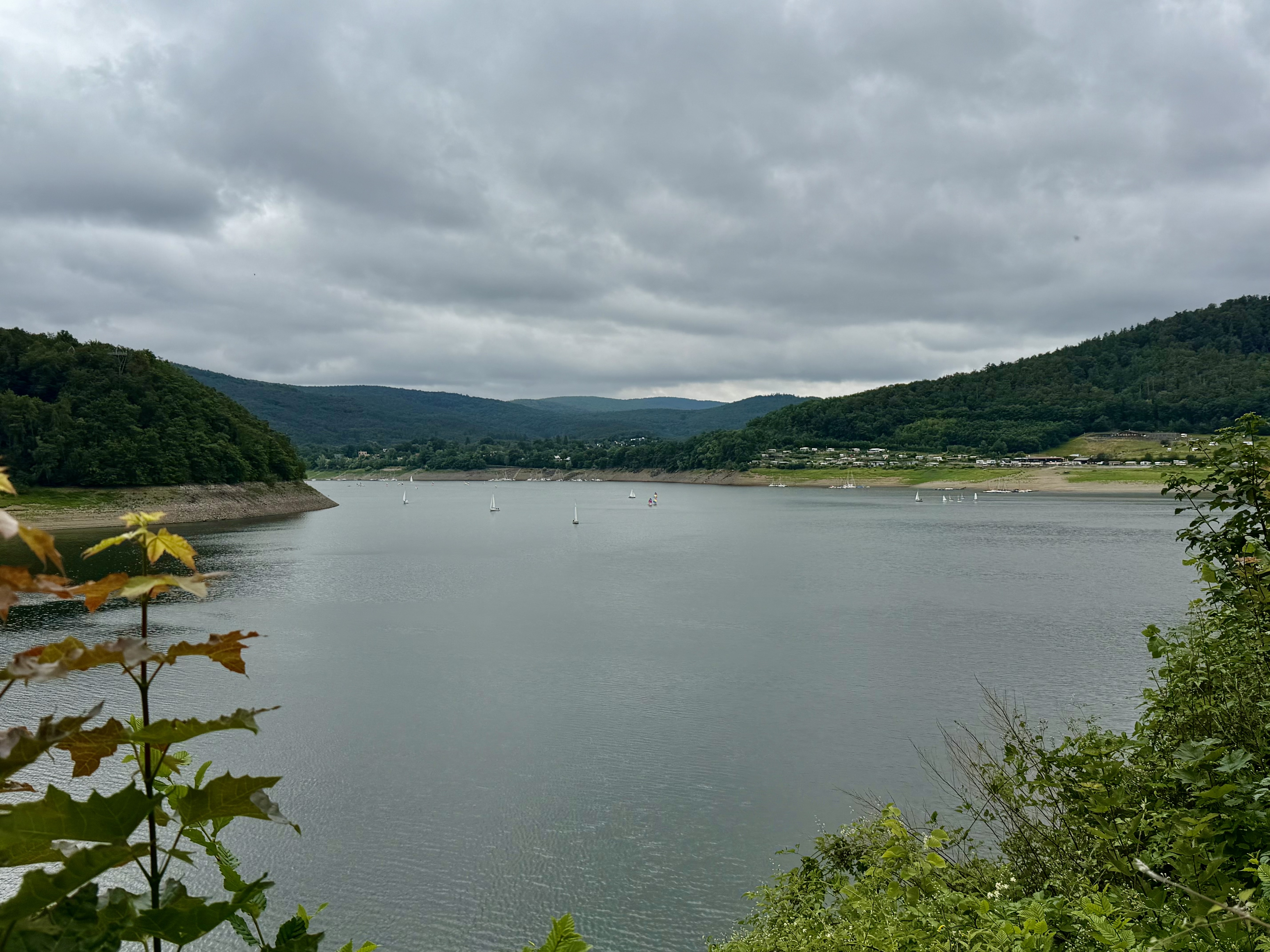
Edersee – A Lake With a Serious History
Edersee isn’t simply another pretty German reservoir.
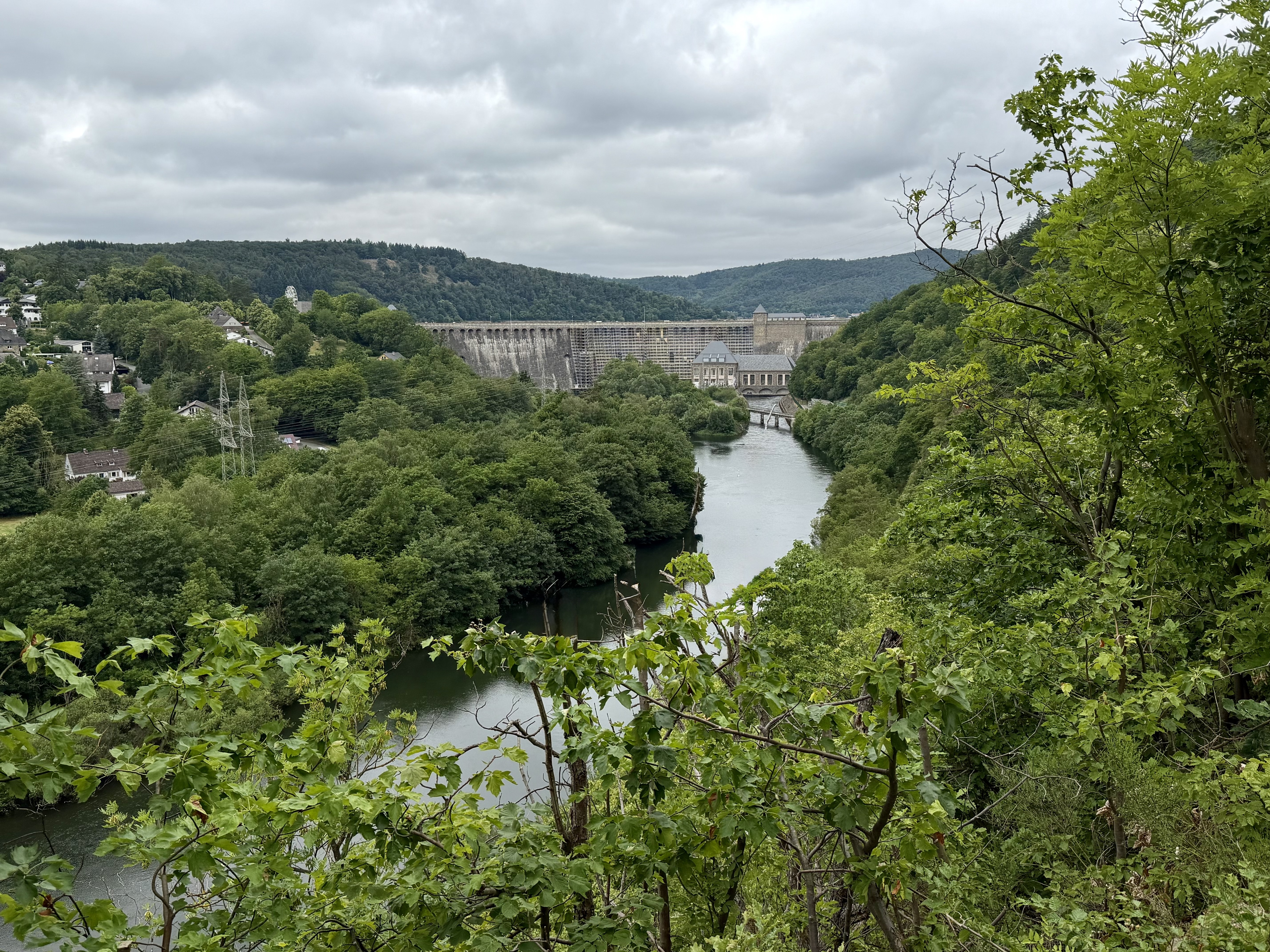
The Eder Dam was constructed between 1908 and 1914, creating one of Germany’s largest reservoirs. The project dramatically changed the landscape, and several villages had to be relocated before the valley disappeared beneath the water.
Then came the Second World War.
During the night of 16–17 May 1943, RAF 617 Squadron attacked several major German dams in what became one of the most famous bombing operations of the war.
The squadron would later become known as the Dambusters.
Specially developed bouncing bombs were used to attack the dams.
The Eder Dam was breached during the raid, releasing an enormous amount of water into the valley below.
The resulting flood caused widespread destruction downstream.
Standing there today, it’s difficult to imagine that violence.
Now it’s cafés, hotels, motorcycles and tourists.
History does strange things to places.
Motorcycle Paradise?
The Edersee region sits in beautiful countryside surrounded by forests, hills and protected natural areas.
For motorcyclists, the area certainly looks promising.
Curving roads.
Forest.
Hills.
Water.
Bikers everywhere.
On paper:
Brilliant.
In reality?
Well…
I wasn’t exactly blown away.
First problem:
The lake looked almost empty.
A reservoir with very little water has roughly the same effect as ordering a beer and receiving only the foam.
Technically, the important components are present.
Emotionally, something is missing.
Second problem:
Tourism.
Hotels.
Restaurants.
Coffee shops.
People everywhere around the obvious spots.
Nothing wrong with that, of course.
People are allowed to enjoy themselves.
How dare they.
But it wasn’t really what I was looking for.
Third problem:
The road along the lake.
Yes, it’s nice.
Yes, it has curves.
Yes, the scenery can be beautiful.
But much of the riding I encountered was restricted to around 50 km/h.
I understand why.
Safety.
Cyclists.
Walkers.
Tourists.
Bikers.
All sharing the same area.
Perfectly sensible.
Unfortunately, sensible and exciting are not always close friends.
With hardly any traffic that morning, riding beautiful curves at 50 km/h felt a little like being invited onto a dance floor and then being told you’re only allowed to shuffle.
So I continued.
Skipping Bad Wildungen
It was still early, and originally Bad Wildungen had been an option.
Another historic town.
More half-timbered buildings.
More opportunities to walk around taking photographs of houses older than some countries.
But I wasn’t feeling it.
So I skipped it.
That’s one of the advantages of travelling without a rigid schedule.
Nothing is compulsory.
If something doesn’t feel right, keep riding.
The GS and I headed towards Melsungen using smaller B and C roads.
Much better.
Less tourism.
More riding.
Exactly what I needed.
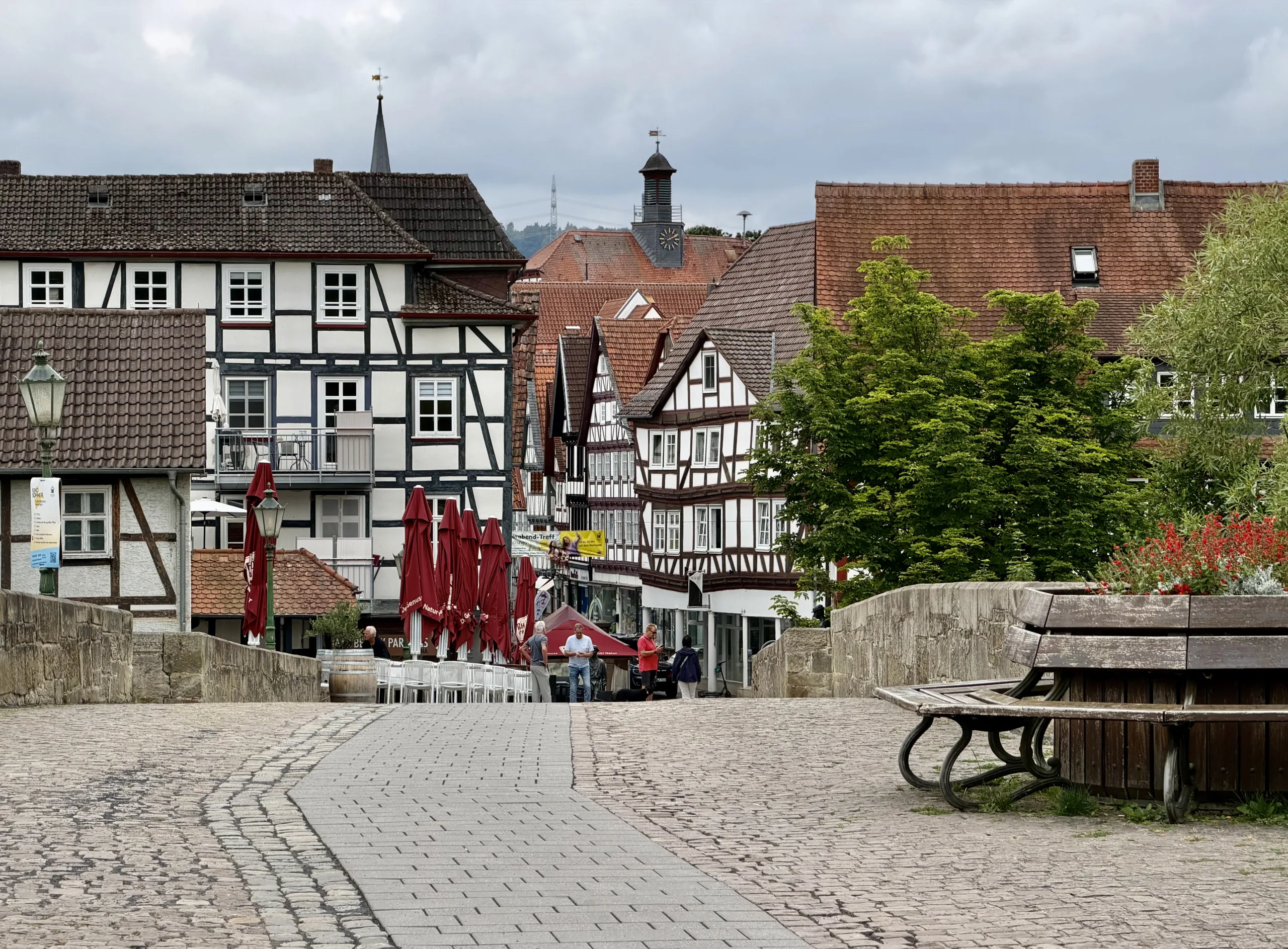
Melsungen – When the Brochure Wins
Melsungen sounds rather impressive when you read about it.
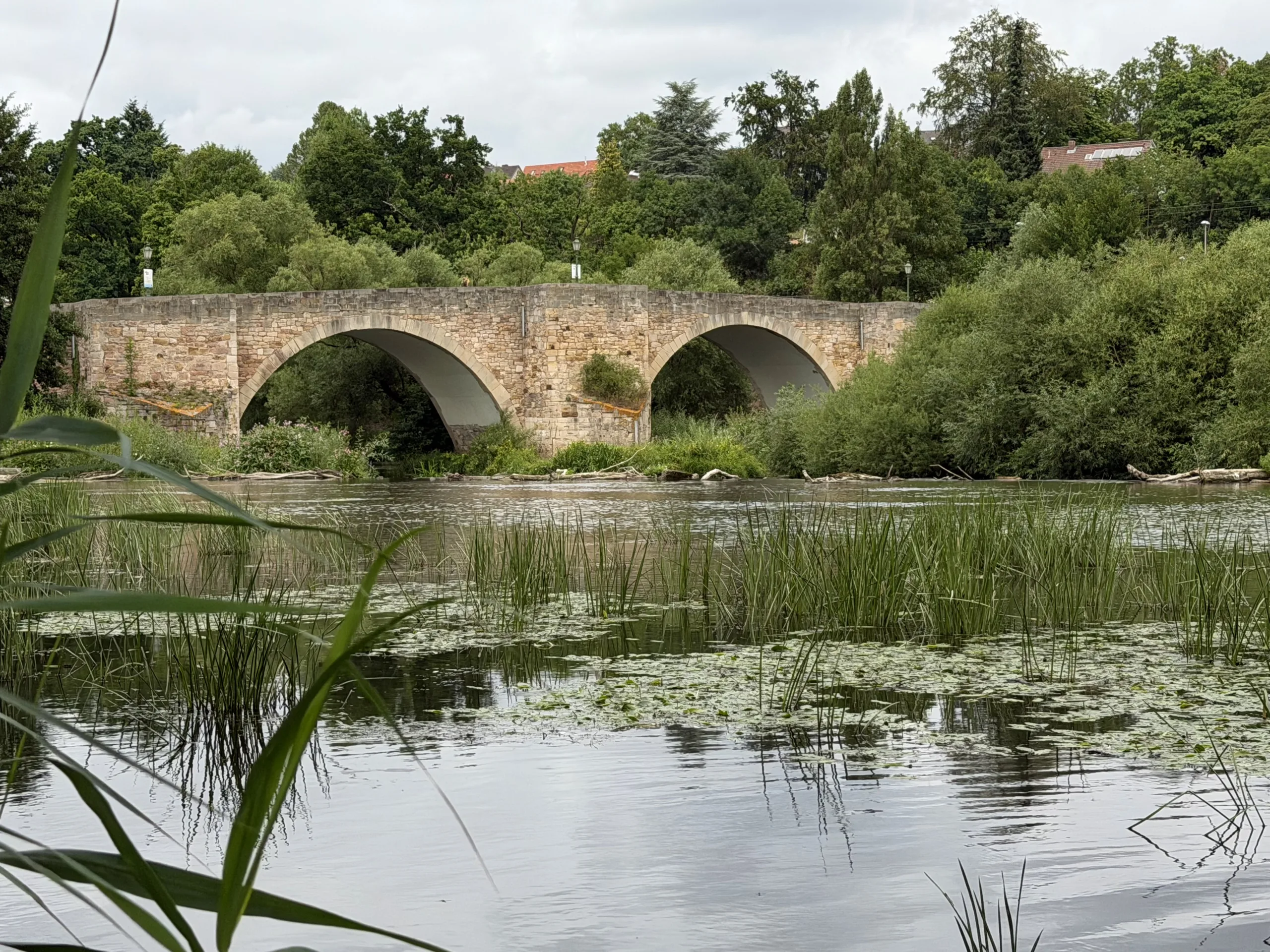
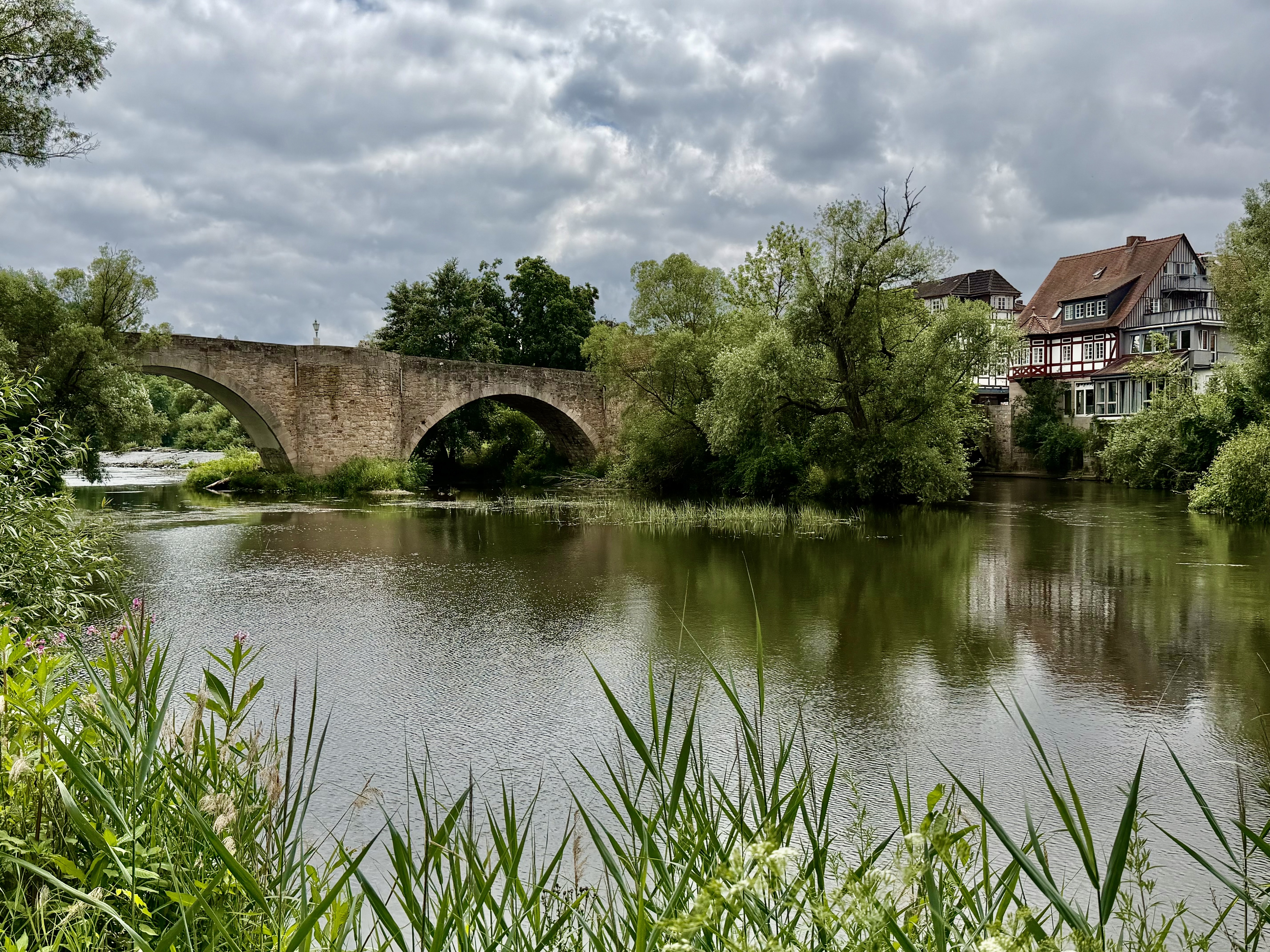
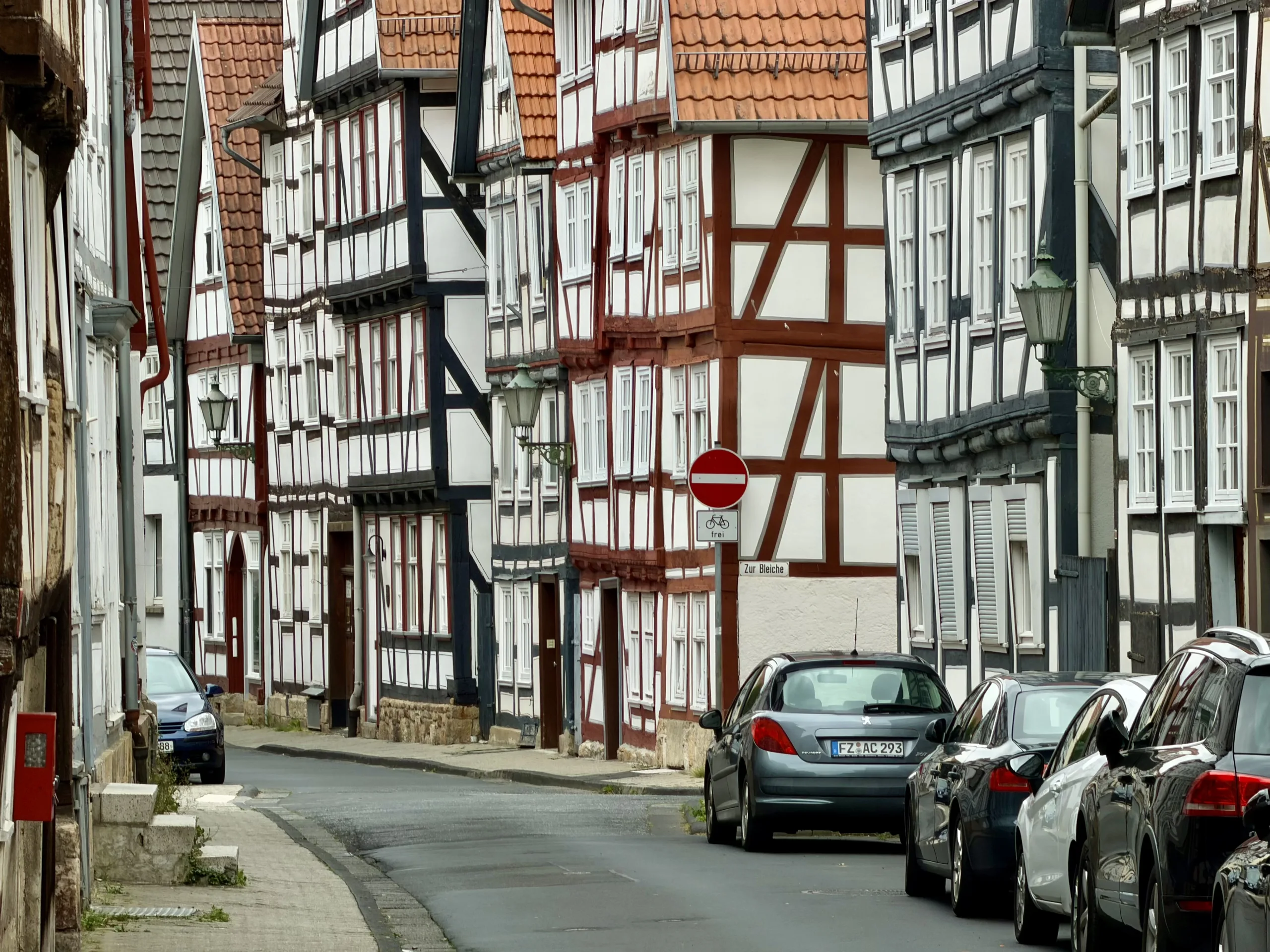
The town’s history stretches back more than 1,200 years, and its old centre contains hundreds of restored half-timbered buildings.
There’s the historic town hall, narrow streets and the old bridge across the Fulda.
The town is also connected with the Bartenwetzer tradition.
Local forestry workers once sharpened their axes—known as Barten—on the sandstone of the old bridge before heading into the forest.
Generations of sharpening left visible grooves in the stone, and the Bartenwetzer eventually became one of the symbols of Melsungen.
History?
Tick.
Half-timbered houses?
Tick.
River?
Tick.
Pretty market square?
Tick.
So naturally I expected photography heaven.
Instead I arrived and thought:
“Is that it?”
Don’t get me wrong.
Melsungen is nice.
Perfectly pleasant.
There are attractive buildings.
There are lovely corners.
But after reading all the marketing, I expected more.
Maybe that was the problem.
Expectations.
Tourist marketing has a special talent for making three flowerpots, an old doorway and a fountain sound like the lost city of Atlantis.
And I have my own highly scientific method for judging whether a town really grabs me:
How often do I pull out the camera?
In Melsungen?
Not often enough.
Getting photographs I genuinely liked was surprisingly difficult.
That tells me something.
Enough for Today
I had been tired all day anyway.
So instead of forcing another 100 kilometres simply to make the daily statistics look respectable, I stopped.
Hotel found.
Checked in around 1 pm.
Motorcycle parked.
Then I spent roughly two hours wandering around town before returning to the hotel.
Nap.
Relaxed evening.
Done.
Total distance:
About 200 kilometres.
Not exactly Dakar Rally material.
But who cares?
This trip isn’t about collecting kilometres.
Tomorrow I would continue east.
And that turned out to be much more interesting.
Day 9 – Melsungen to Halle/Saale
10.07.26
Today was one of those riding days where nothing spectacular happens…
…and somehow everything works.
No world-famous mountain pass.
No dramatic destination.
No “bucket list” attraction.
Just great little roads carrying me steadily east.
Towards the part of Germany that, within my lifetime, belonged to another country.
The former GDR.
That alone gives travelling through this region a different feeling.
Crossing an Invisible Border
Germany has been reunified since 1990.
For younger people, the idea of two German states probably feels like distant history.
For anyone old enough to remember it, the former border still has weight.
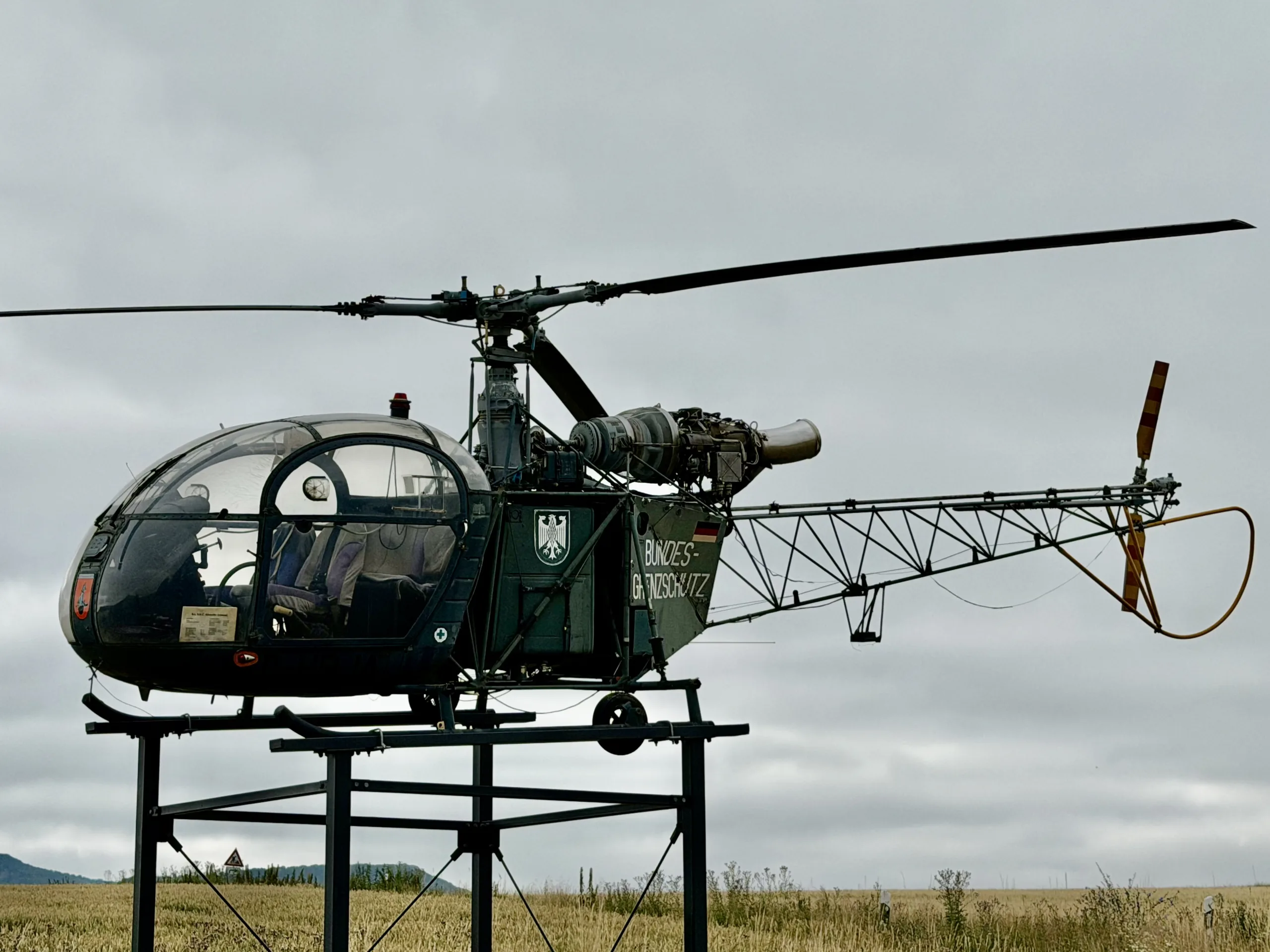
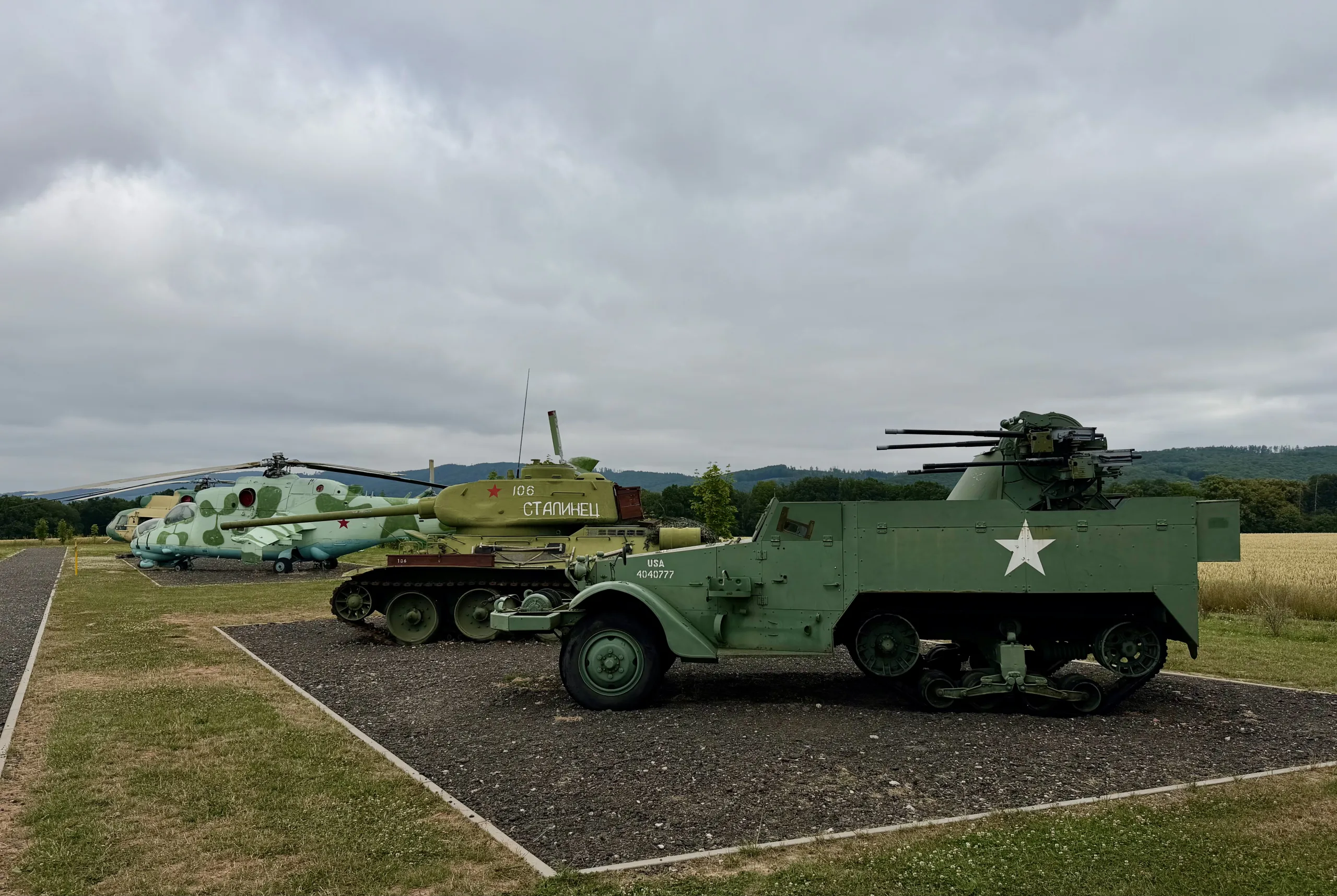
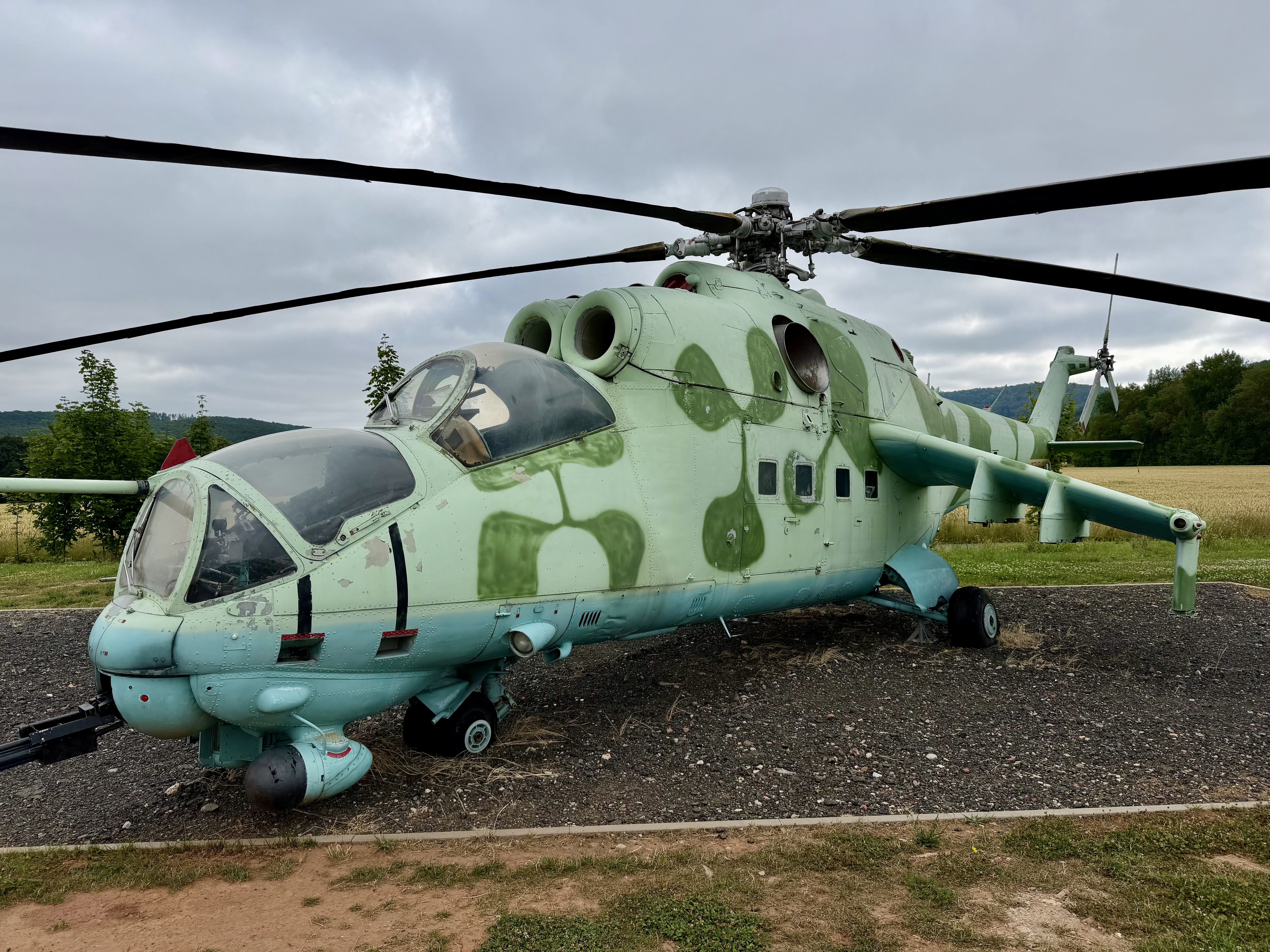
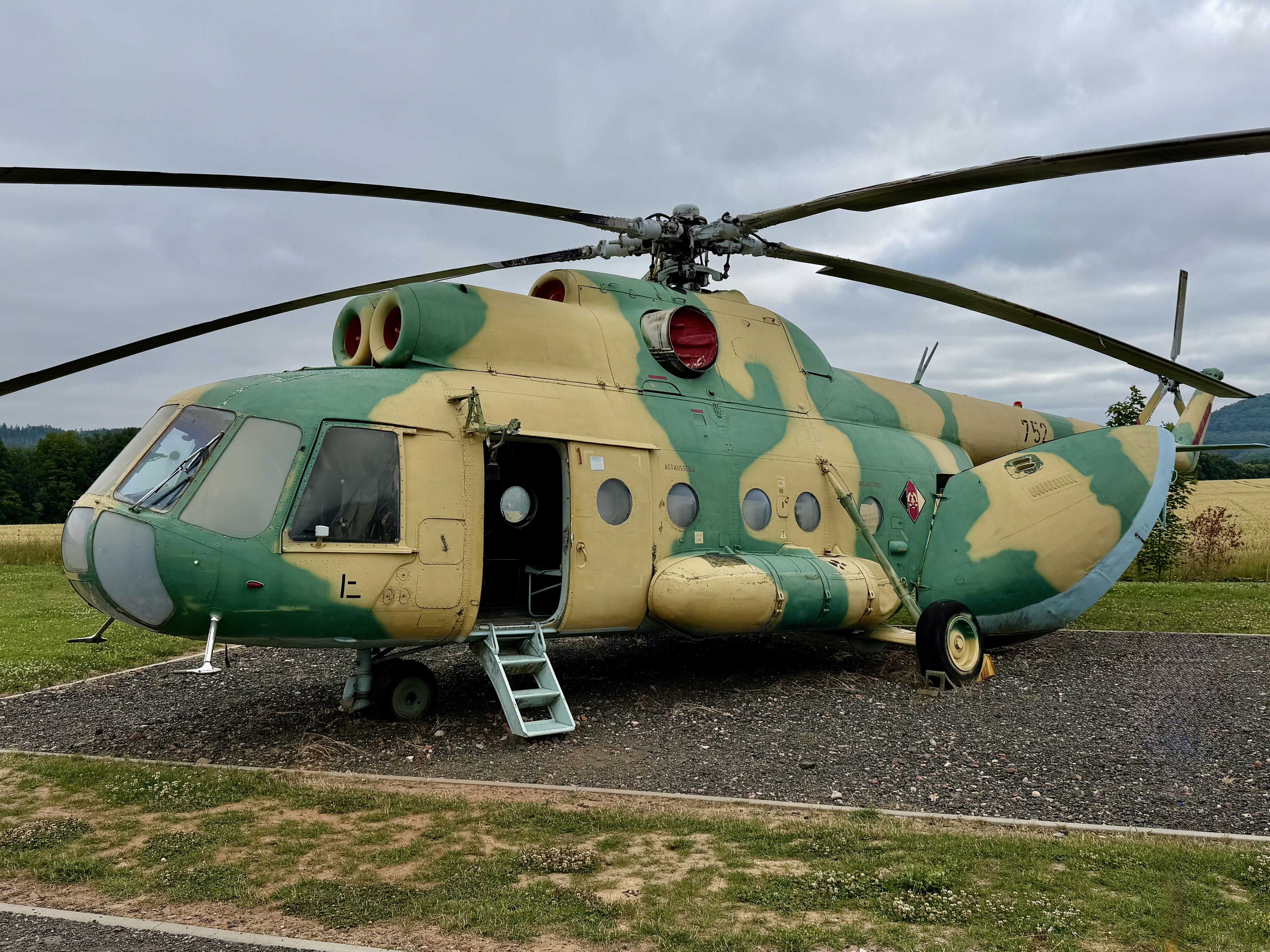
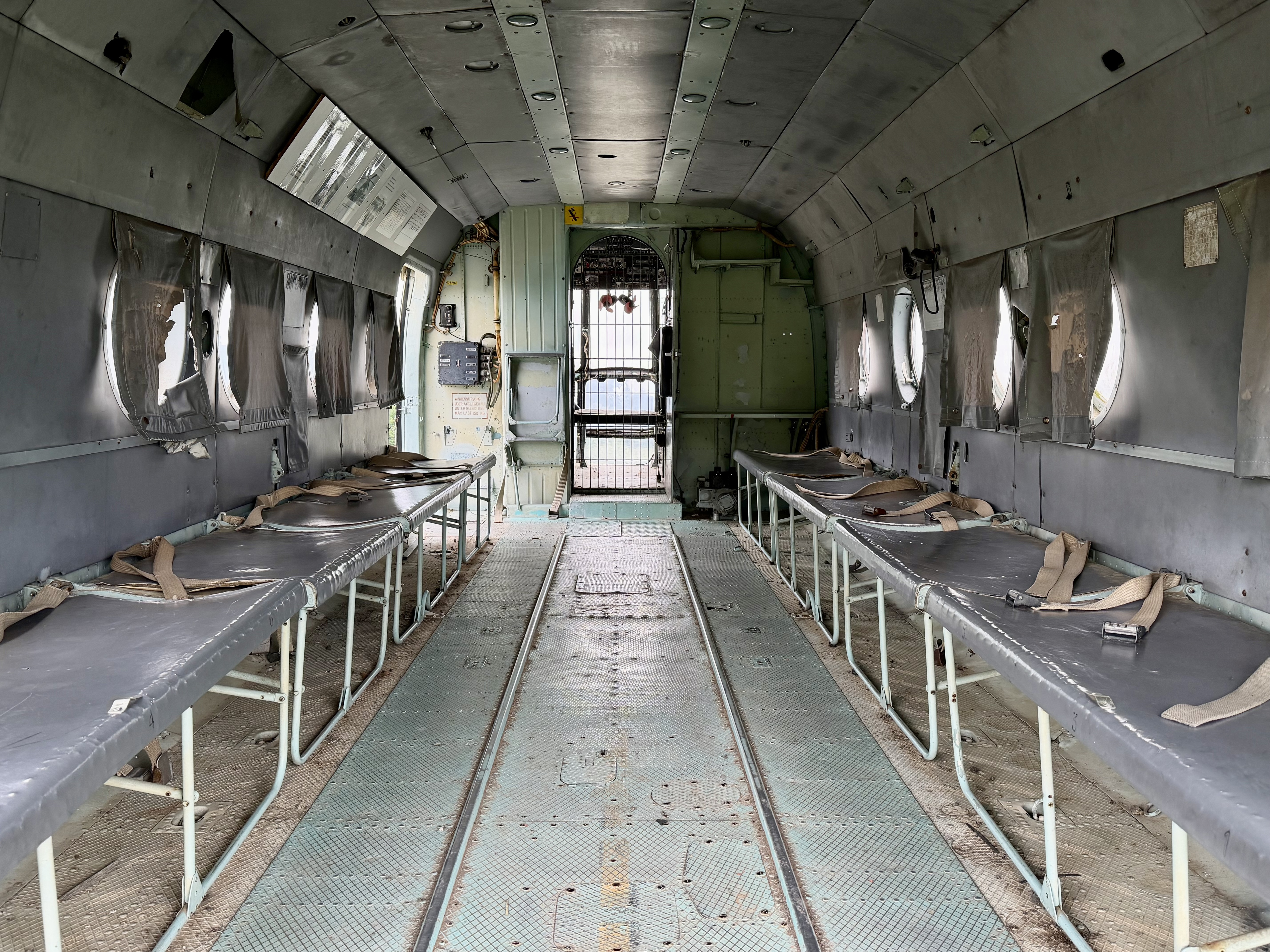
Today I stopped at a border museum along what was once the frontier between West Germany and East Germany.
It’s strange.
Today you simply ride across.
No passport.
No checkpoint.
No guards.
No barriers.
Nothing.
Just another road.
But for decades this was one of the physical dividing lines of the Cold War.
Families separated.
Communities divided.
Watchtowers.
Fences.
Patrol roads.
An entire political system made visible in concrete, wire and steel.
And now?
Motorcycle travellers stop, take photographs and continue east.
History can change remarkably quickly.
Eisleben – Copper, Luther and a Lot of History
Later I passed through the region around Eisleben.
The landscape still carries traces of centuries of mining, particularly the copper-slate industry that shaped this part of Saxony-Anhalt.
But Eisleben is internationally known for another reason.
Martin Luther.
He was born in Eisleben in 1483.
And, rather remarkably, he also died there in 1546.
His life took him across Germany and placed him at the centre of the Protestant Reformation, one of the most significant religious and political transformations in European history.
Yet both the beginning and the end of his life are tied to Eisleben.
His birthplace and the house associated with his death are today part of the UNESCO World Heritage sites connected with Martin Luther and the Reformation.
So if history is your thing, Eisleben deserves considerably more attention than I gave it today.
Because I kept riding.
Sometimes I’m interested in history.
Sometimes I want museums.
Sometimes I can spend hours reading information boards.
And sometimes there’s a cracking little road in front of me and my brain says:
“Nah mate. Keep going.”
Today was one of those days.
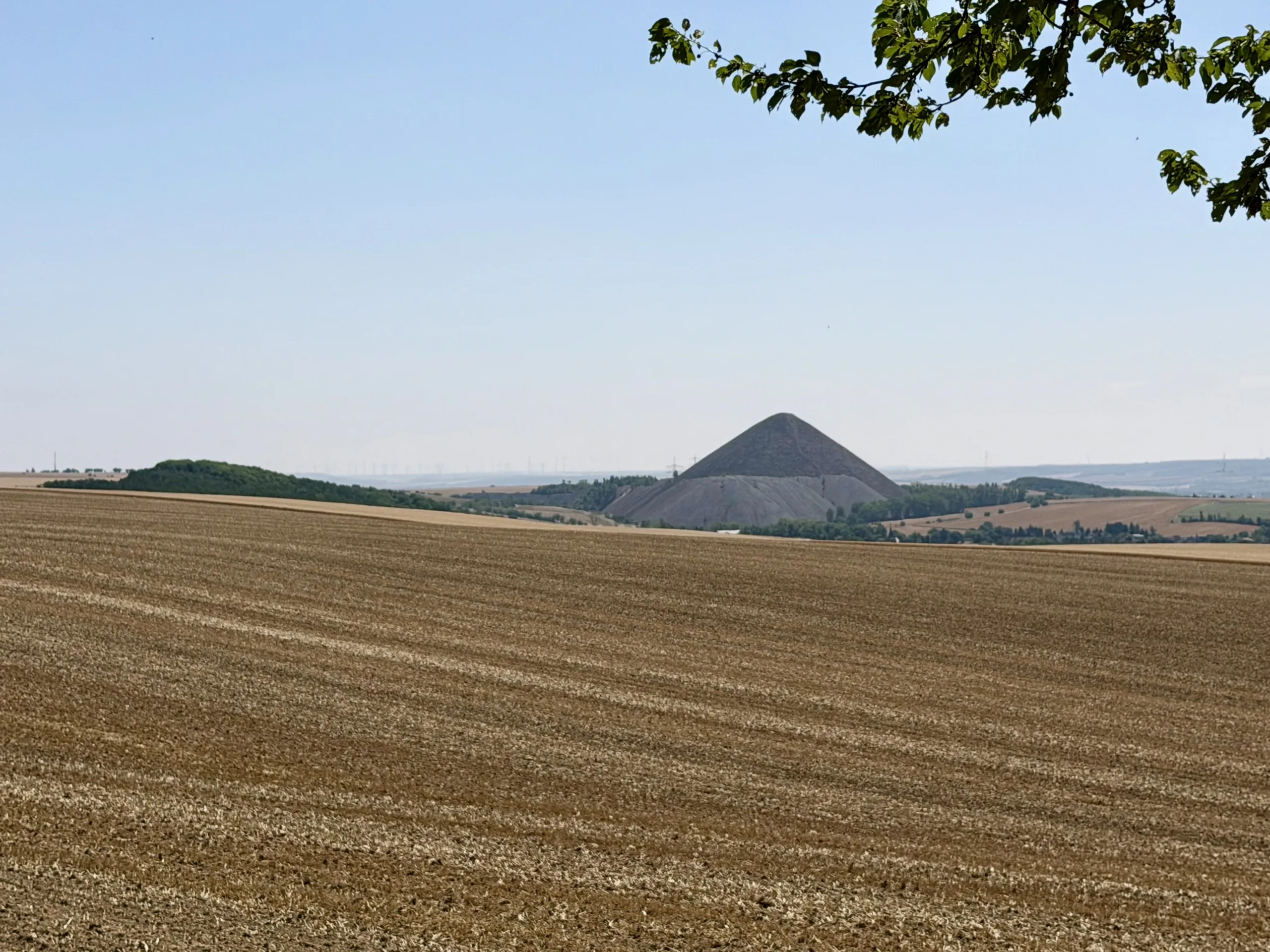
Thuringia Turns on the Sunshine
The morning had started grey and cold.
Again.
Clouds.
Low temperatures.
The sort of weather where Germany reminds you that July is merely a suggestion.
Then Thuringia welcomed me properly.
The clouds disappeared.
Blue arrived.
Temperatures climbed towards 25 degrees.
Suddenly summer had remembered its job.
And the riding became better and better.
Small roads.
Rolling countryside.
Villages.
Very little traffic.
Nothing particularly famous.
Nothing that would generate a thousand Instagram likes.
Just enjoyable motorcycle riding.
And sometimes that’s better.
Dessau? Maybe Next Time
At some point I realised I had probably ridden past several places that deserved a proper visit.
Dessau was the obvious one.
For anyone interested in architecture and design, Dessau is hugely significant because of the Bauhaus.
The Bauhaus was founded by Walter Gropius in Weimar in 1919 and moved to Dessau in 1925.
Its philosophy brought art, craft, architecture and industrial design together in a completely new way.
The movement had an enormous influence on modern architecture and design around the world.
The famous Bauhaus Building and Masters’ Houses in Dessau remain among the most important physical reminders of that movement and are recognised as UNESCO World Heritage.
In other words:
Quite important.
Did I stop?
Nope.
Terrible cultural behaviour.
I know.
But I simply wasn’t in sightseeing mode.
The ride was too good.
The rhythm was right.
Bike.
Road.
Curve.
Village.
Forest.
Repeat.
Stopping would have broken the flow.
Dessau has survived without me for more than a thousand years.
I suspect it can manage a little longer.
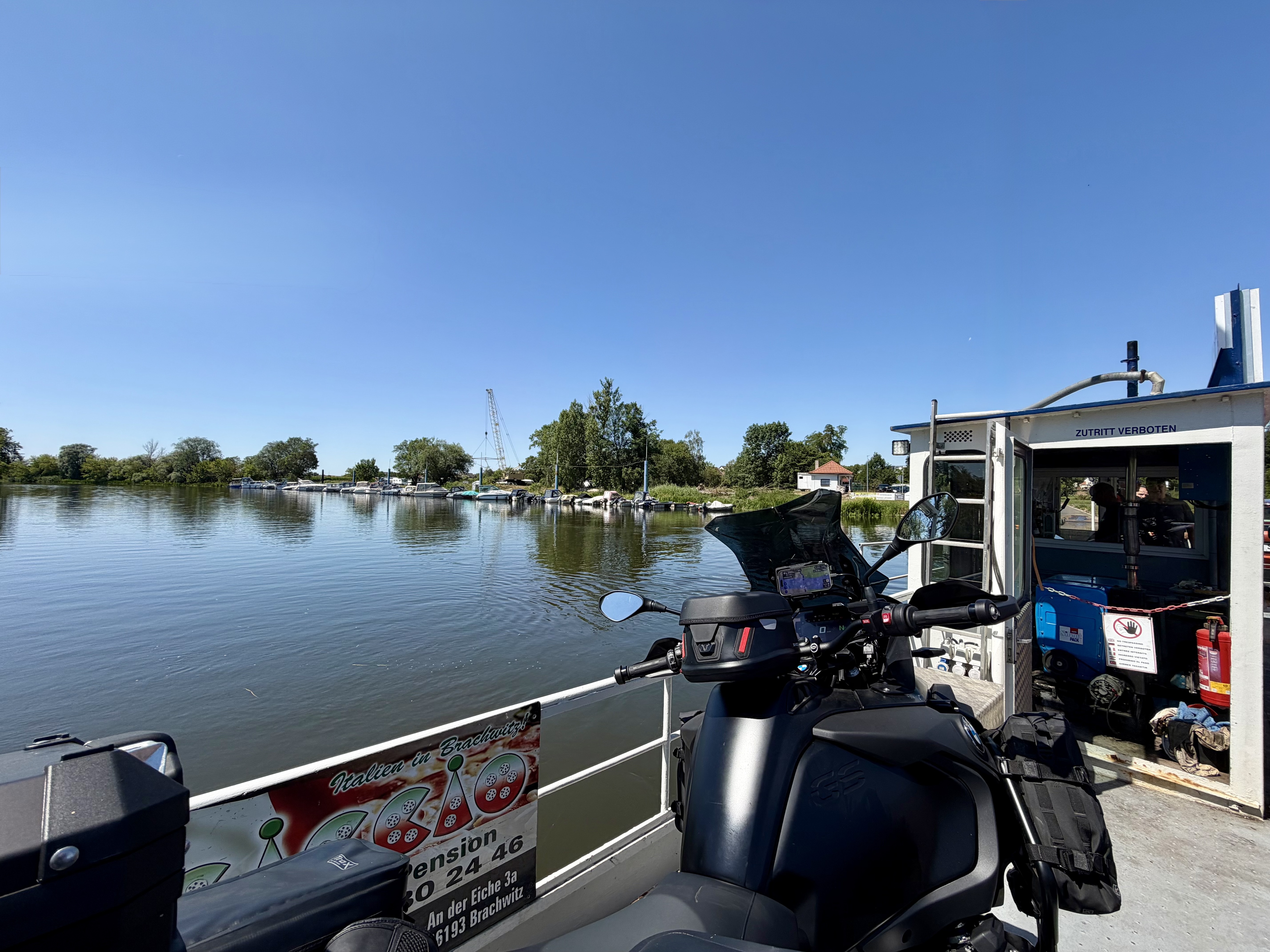
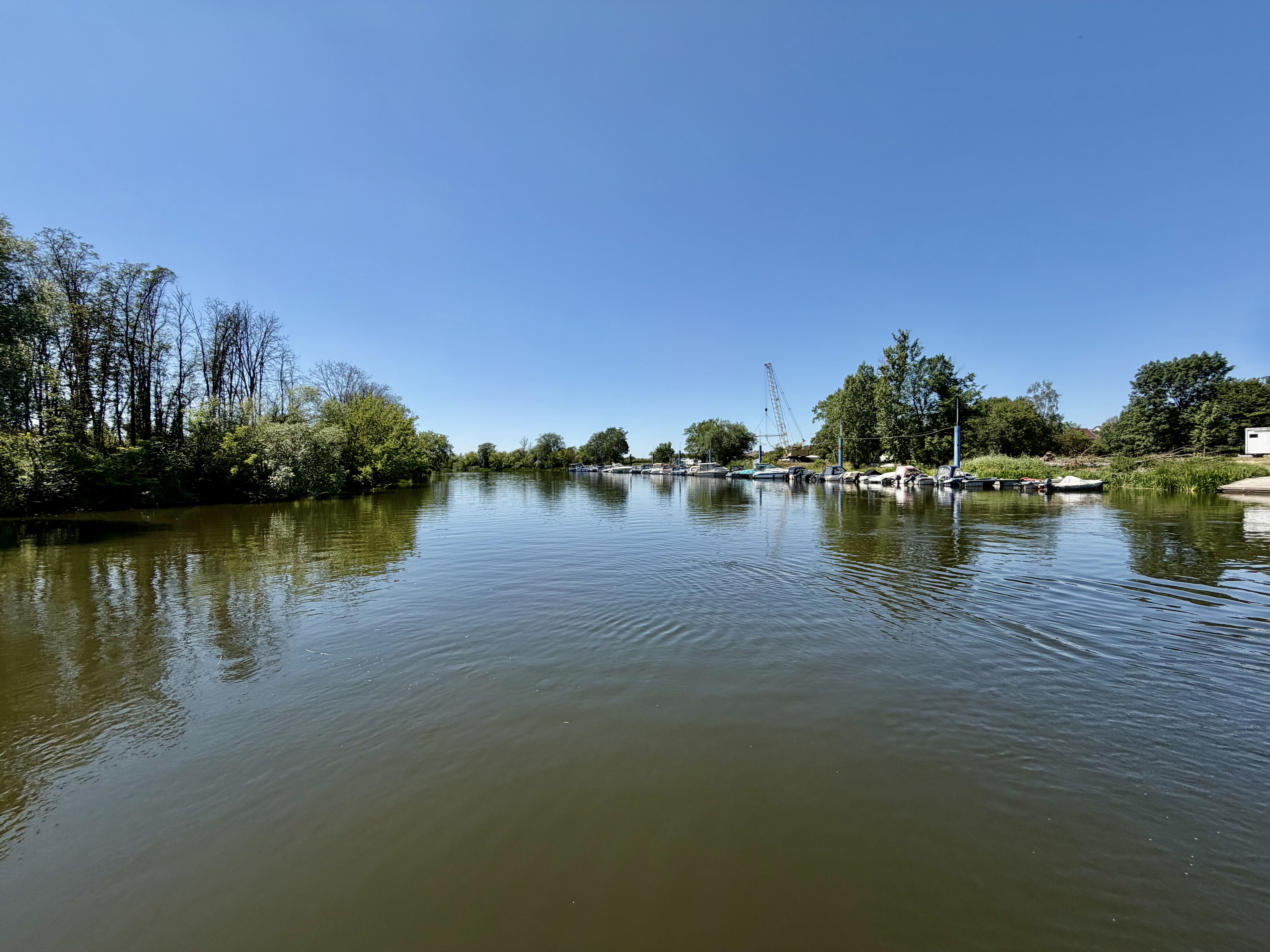
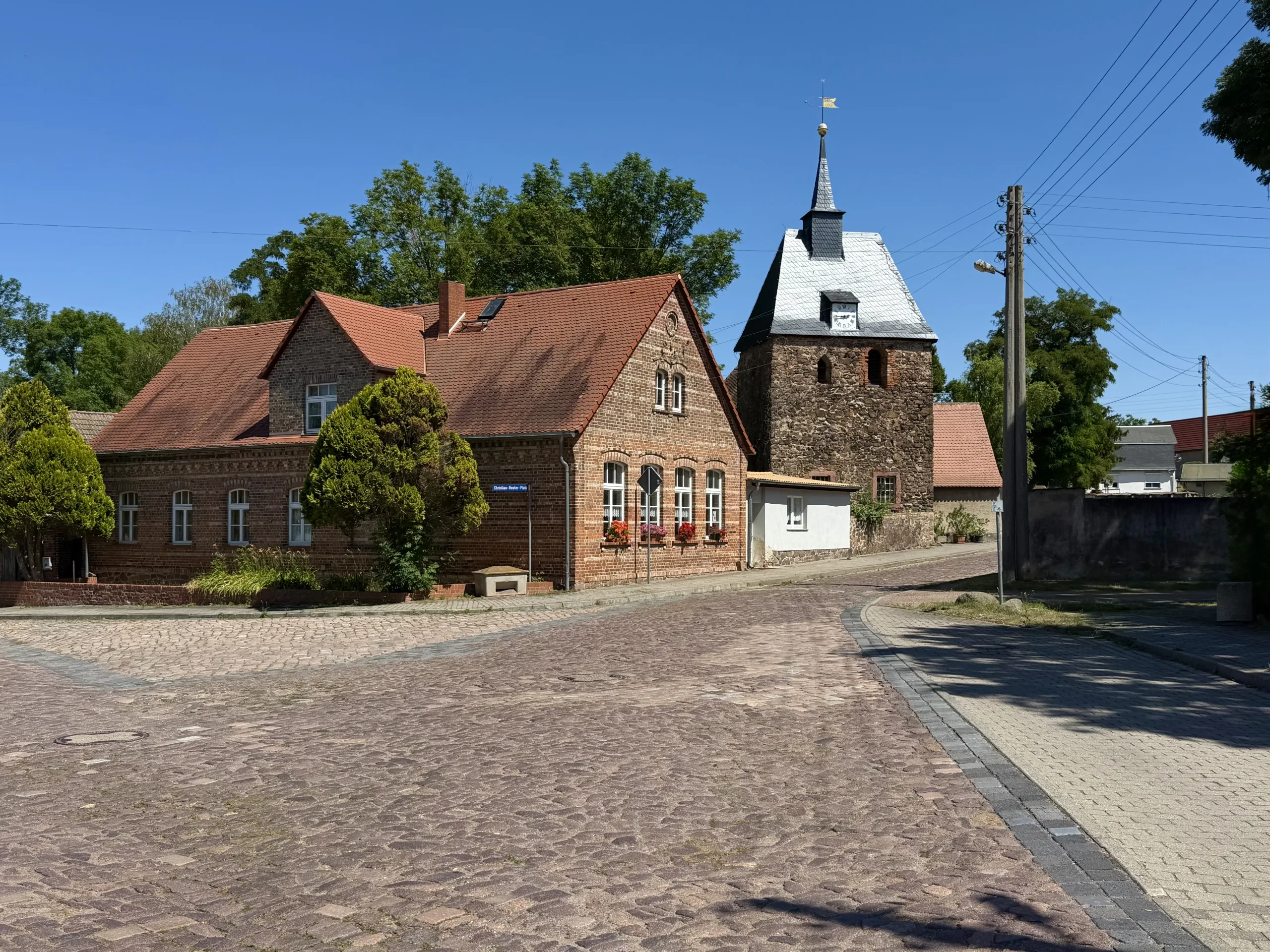
Highway Hotel or Sleepy Village?
After around 280 kilometres, the day presented me with a choice.
Option one:
A convenient hotel close to the A9 motorway.
Easy access.
Practical.
Efficient.
Probably completely forgettable.
Option two:
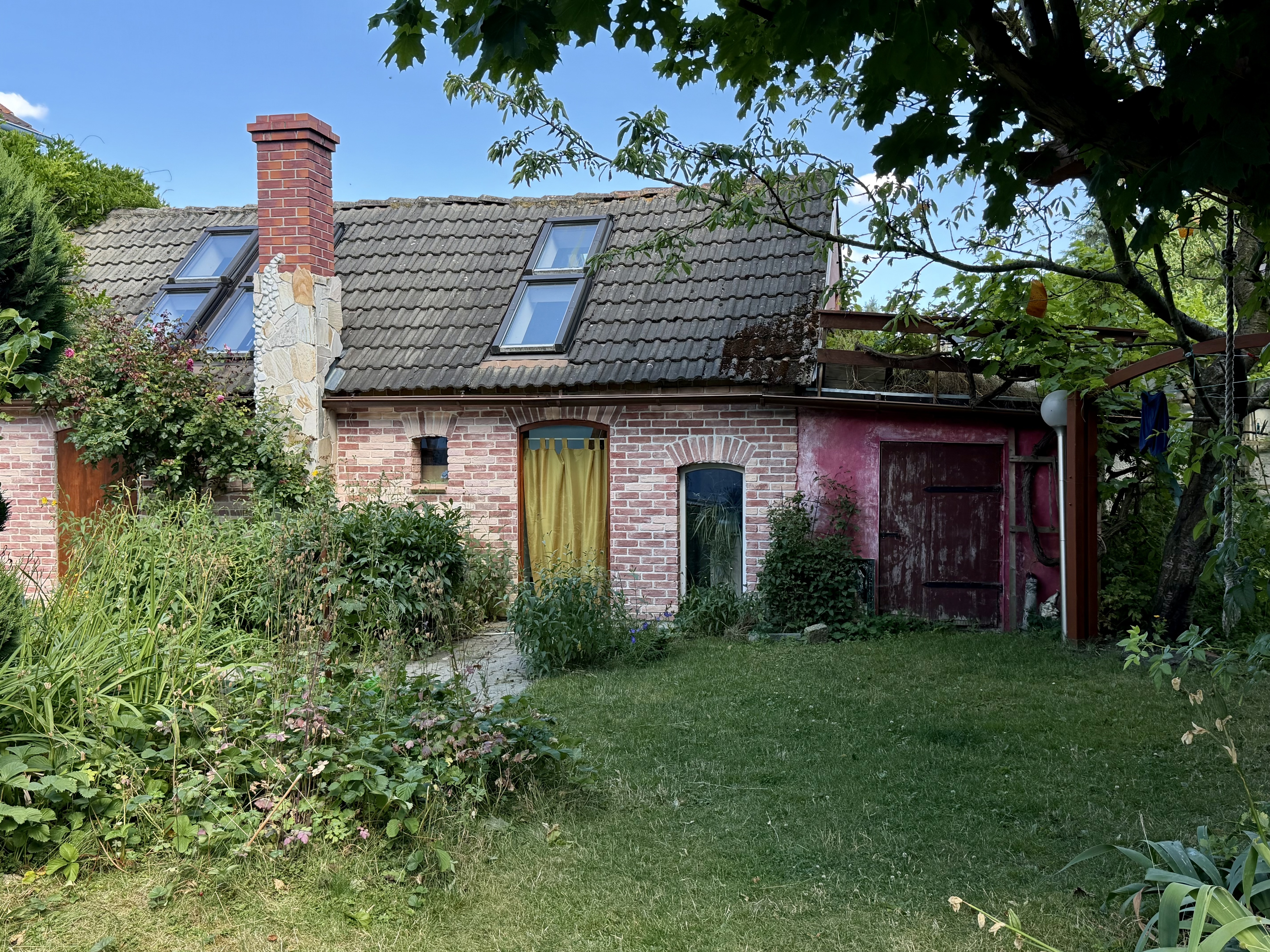
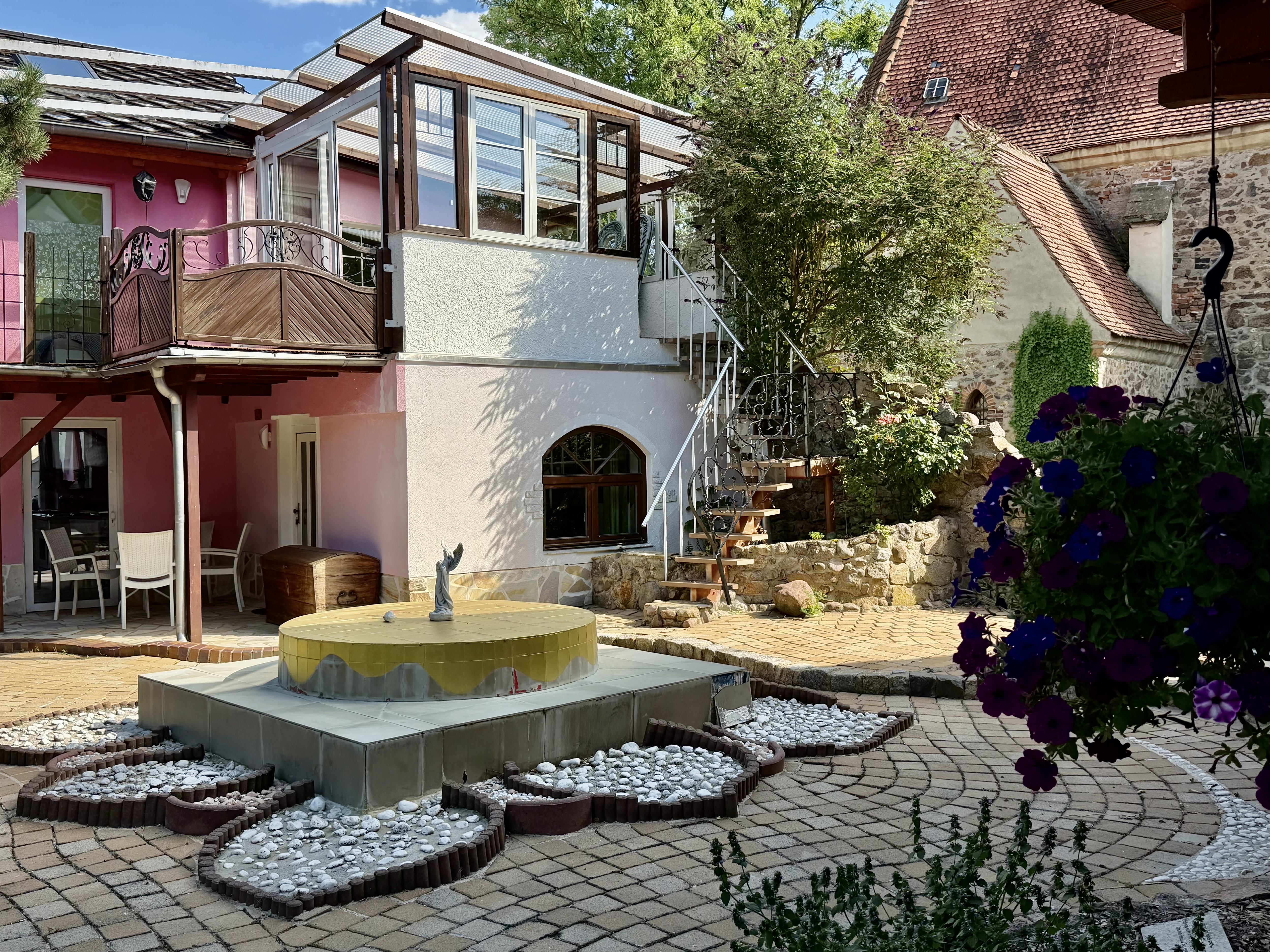
Ride a few kilometres farther to a sleepy village and stay at a quiet place run by a Swiss-German couple.
Now…
If you’ve followed any of my trips, you already know exactly which option I chose.
Motorway hotel?
Bugger that.
Sleepy village it was.
And once again, that’s the beauty of travelling like this.
The destination doesn’t always have to be famous.
The hotel doesn’t need four stars.
There doesn’t need to be a tourist attraction outside the window.
Sometimes all you need is a quiet place, friendly people, somewhere safe for the motorcycle and the feeling that you’ve ended the day in exactly the right spot.
Three Days, Three Completely Different Moods
Looking back, these three days perfectly explain why I enjoy travelling by motorcycle.
Day 7?
I barely touched the bike.
And it was exactly what I needed.
Bad Pyrmont surprised me not with spectacular architecture or some famous attraction, but with trees, parks, fresh air and the simple pleasure of having nowhere to go.
Day 8?
Edersee gave me fascinating history but didn’t really capture me as a riding destination.
Melsungen looked better in the brochure than it felt through my camera lens.
And that’s okay.
Not every place needs to blow your socks off.
Sometimes “nice” is simply nice.
Then came Day 9.
No massive attraction.
No spectacular mountain pass.
Just 280 kilometres of small roads heading east, Cold War history along the former German border, centuries of mining around Eisleben, Martin Luther lurking in the historical background, and Dessau’s Bauhaus waiting patiently for another visit.
And yet Day 9 was probably the best riding day of the three.
Funny how that works.
The days you expect to be spectacular sometimes aren’t.
The days with almost nothing planned sometimes become the ones you remember.
That’s why I increasingly avoid planning motorcycle trips down to the last detail.
Because plans are useful.
But plans also have absolutely no idea how you’ll feel when you wake up.
Sometimes your body wants another 300 kilometres.
Sometimes it wants a mountain pass.
Sometimes it wants history.
And sometimes it wants you to shut up, leave the GS in the garage and go back to bed.
For once, I listened.
And I’m bloody glad I did.
Tomorrow?
East again.
Where exactly?
We’ll see.
After all, the road usually comes up with better ideas than I do.
Ride. Roam. Repeat.
#dustysocks


Green and quiet always the best for relaxing ❤️😍