

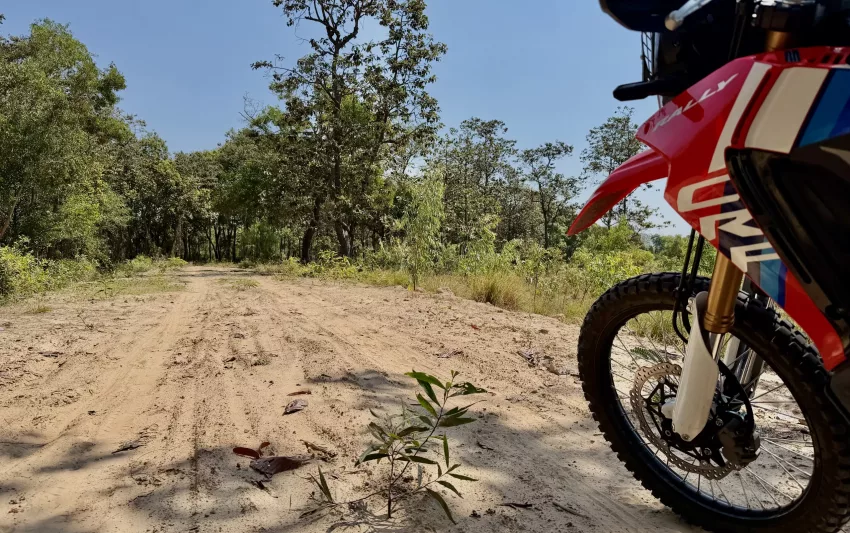
Chasing the Mun River to the Mekong — Deep Sand, Buffalo Trails and Sweaty Madness on a Honda CRF 300
Dates covered 15.03.26 – 16.03.26
Day 1 — Rasi Salai to Ubon Ratchathani
15.03.2026
Every proper motorcycle adventure starts with a plan that sounds absolutely brilliant while sitting comfortably in the shade with a coffee in hand, a cool morning breeze floating through the air, and absolutely no understanding yet of how sweaty, dusty and mildly ridiculous the day is going to become once reality arrives.
This trip was exactly one of those plans.
The idea sounded simple enough on paper, which usually means it probably is not simple at all once you actually start doing it.
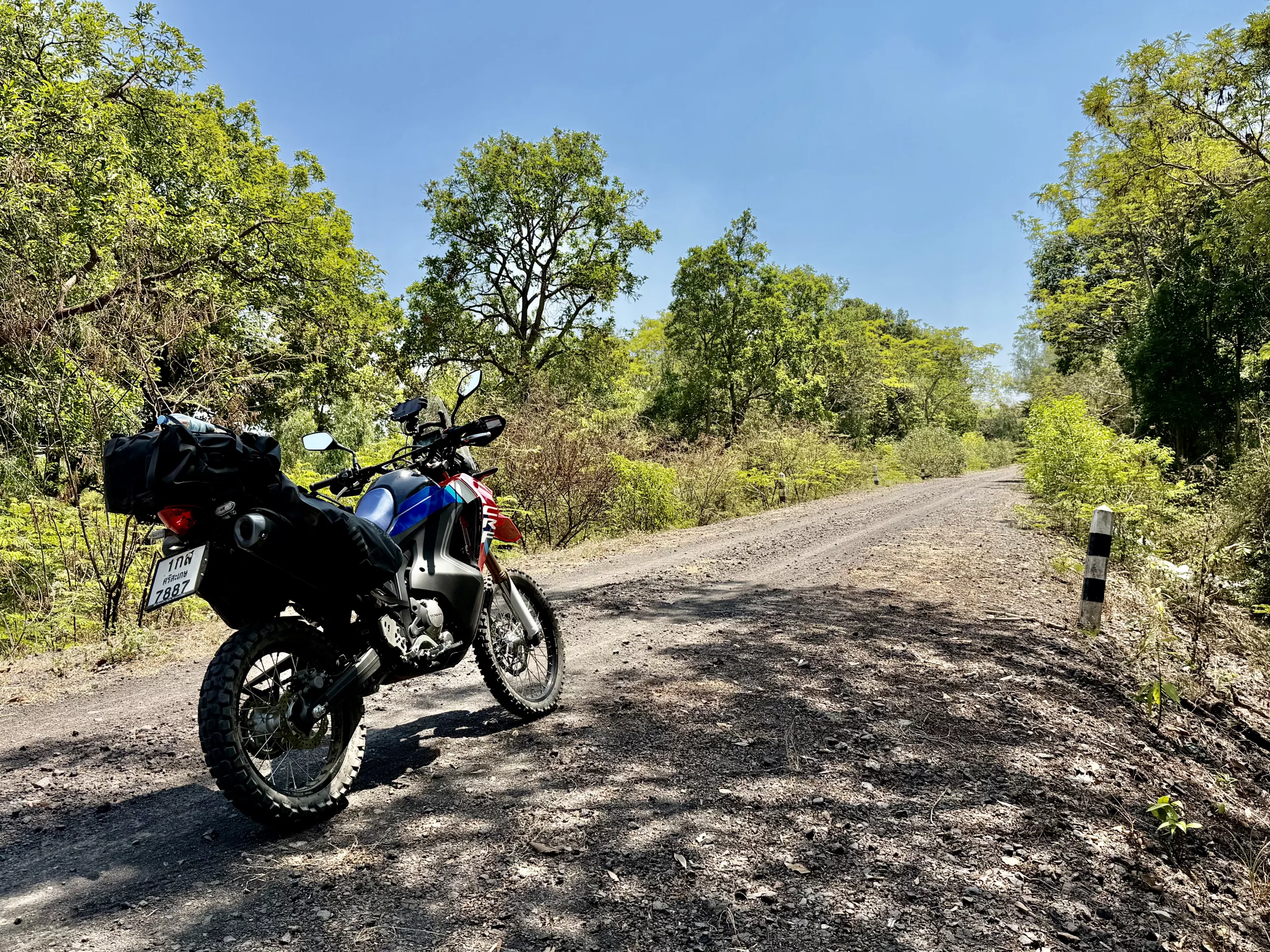
The mission was to follow the Mun River all the way east through the endless landscapes of Isaan until the river finally crashes dramatically into the mighty Mekong River at Khong Chiam, while trying to avoid boring tarmac roads as much as possible and instead riding dirt tracks, gravel roads, sandy river paths and whatever strange local shortcuts appeared in front of the front wheel of the Honda CRF.
Now for people who have never heard about the Mun River, it is actually one of the most important rivers in Thailand, although compared to the famous Mekong it often gets forgotten like the quiet bloke at a party who suddenly turns out to have the best stories once you start talking to him. The Mun River stretches for more than 600 kilometres through northeastern Thailand, starting near the mountains around Khao Yai before winding its way slowly across the dry farmland and villages of Isaan, feeding rice fields, fishing communities and endless rural landscapes before eventually flowing into the Mekong at Khong Chiam.
And then there is the Mekong itself, which is not just a river but more like an entire moving world of its own, running nearly 5,000 kilometres from the Tibetan Plateau through China, Myanmar, Laos, Thailand, Cambodia and Vietnam while supporting millions of people who depend on it every single day for transport, fishing, farming and life in general, making it one of the most important rivers anywhere on the planet.
Reaching the point where the Mun joins the Mekong somehow felt like a proper goal for this little ride, because rivers always have something slightly romantic and adventurous about them, especially in Southeast Asia where life still happens directly along the water and where every bend in the river seems to hide another fishing village, another temple or another dusty little road disappearing off into nowhere.
At least that was the theory.
The reality started with me being spectacularly lazy in the morning.
Now every rider in Thailand knows one very important thing during March and April, and that thing is simple: if you want to survive the heat without turning yourself into human barbecue, you leave early, ride hard in the cooler morning hours and then find shade, food and air conditioning before the afternoon sun starts behaving like an angry flamethrower pointed directly at your forehead.
I knew this very well.
Unfortunately knowing something and actually doing it are two completely different skills.
Instead of leaving at sunrise like a smart person, I somehow managed to spend far too much time drinking coffee, then tea, then more coffee while moving around slowly like an exhausted sloth that had recently discovered caffeine for the first time.
By the time I finally loaded the bike and rolled out of Rasi Salai it was already 9 am, which in Thailand during hot season is basically the equivalent of starting your ride inside a giant oven.
Still, once the Honda CRF started buzzing happily underneath me and the morning air rushed through the helmet, all the laziness immediately disappeared and the excitement returned because that little bike somehow always makes even simple rides feel playful and adventurous.
The first ten kilometres were standard tarmac roads cutting through sleepy Isaan villages where dogs wandered across the road without any concern for traffic whatsoever, old aunties swept dust away from their front yards despite there being absolutely no chance of winning that battle, and overloaded scooters transported impossible combinations of humans, chickens, vegetables and random household furniture with a level of balance that would probably impress professional circus performers.
Then finally the asphalt disappeared and the fun properly started.
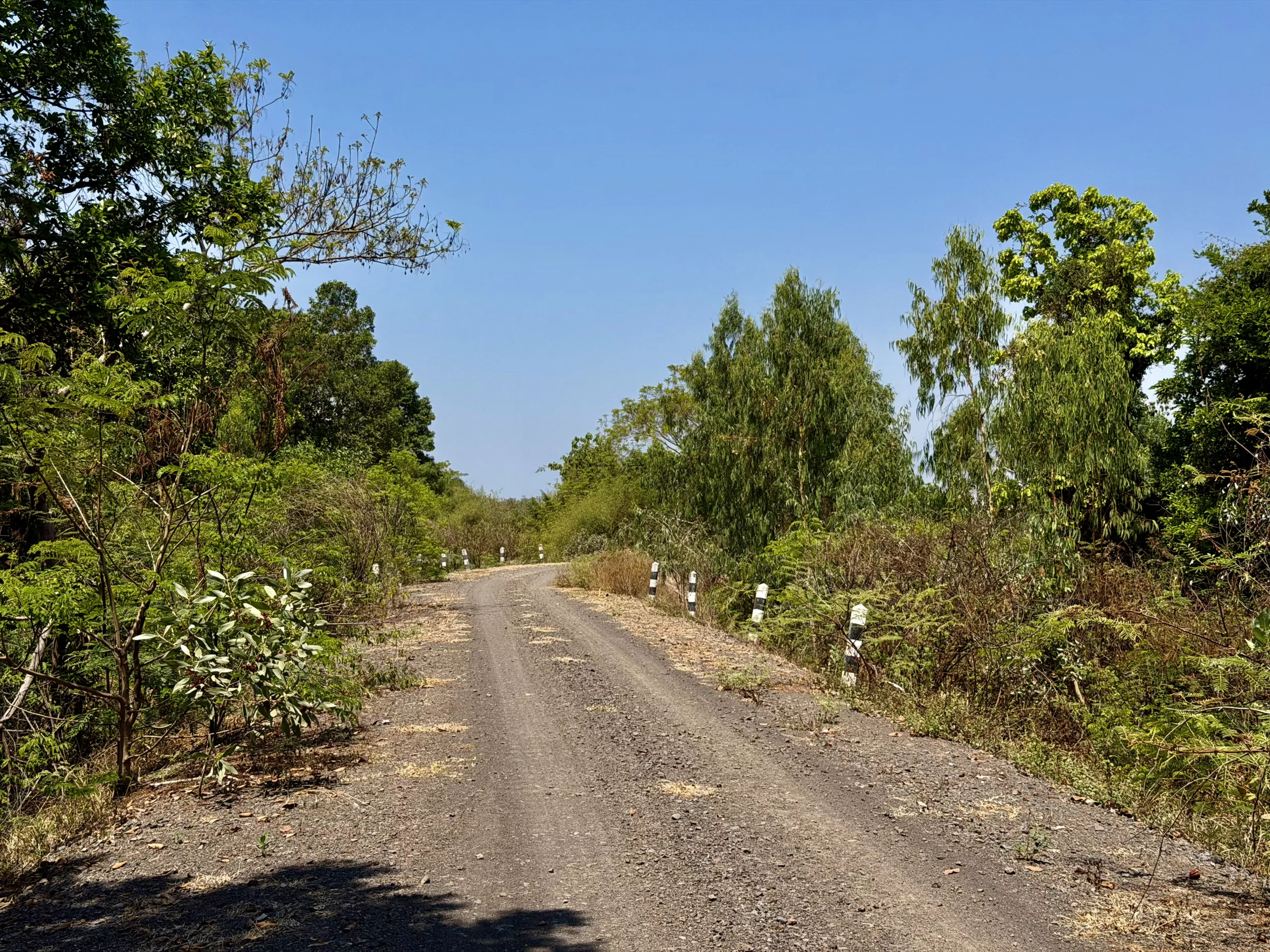
The gravel roads began.
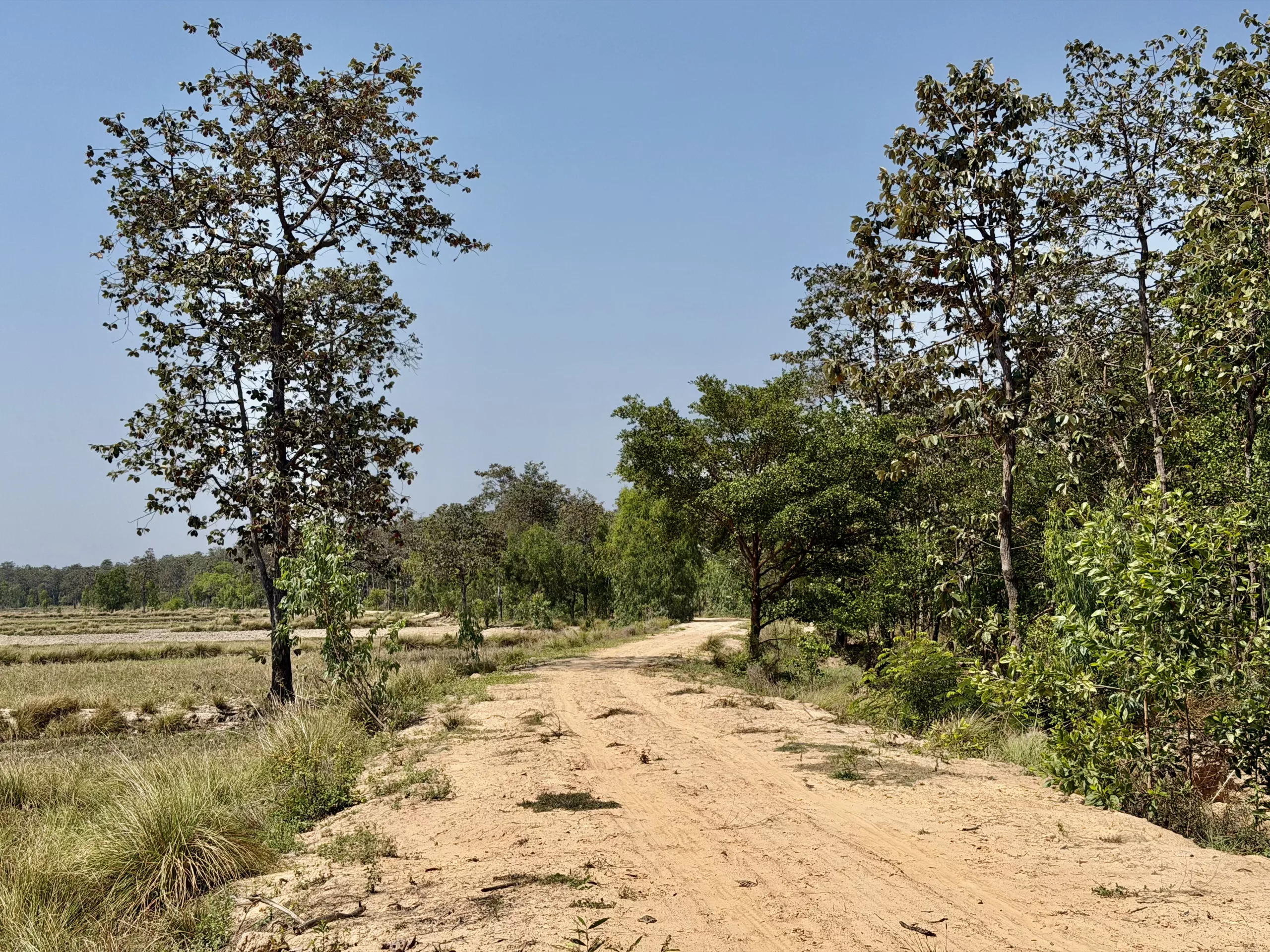
Long dusty tracks stretched across dry farmland while little clouds of red dirt floated behind the bike, and immediately the entire atmosphere changed from normal travelling into actual adventure riding because once you leave paved roads in Thailand you enter a completely different world where everything suddenly becomes slower, more unpredictable and infinitely more interesting.
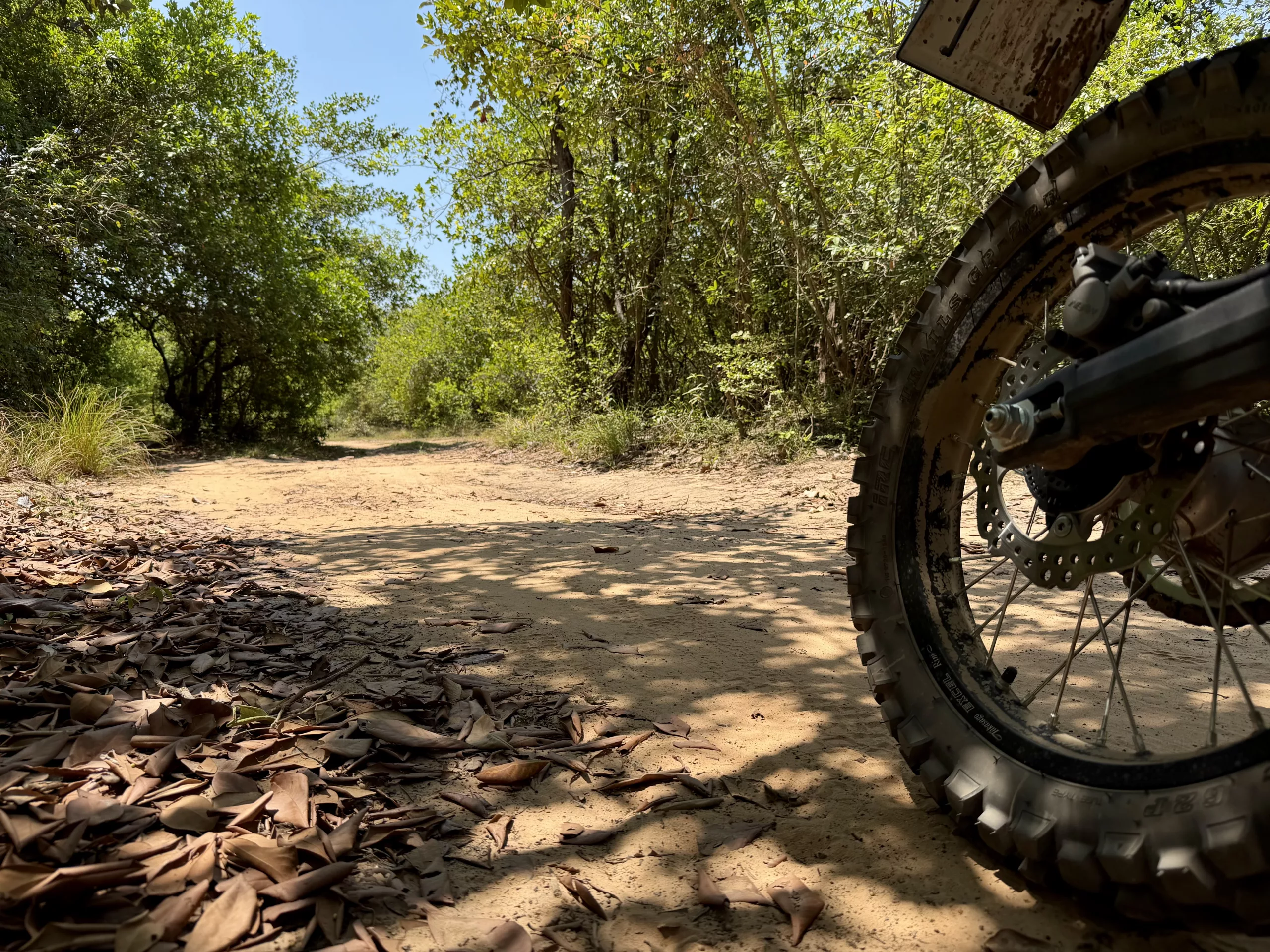
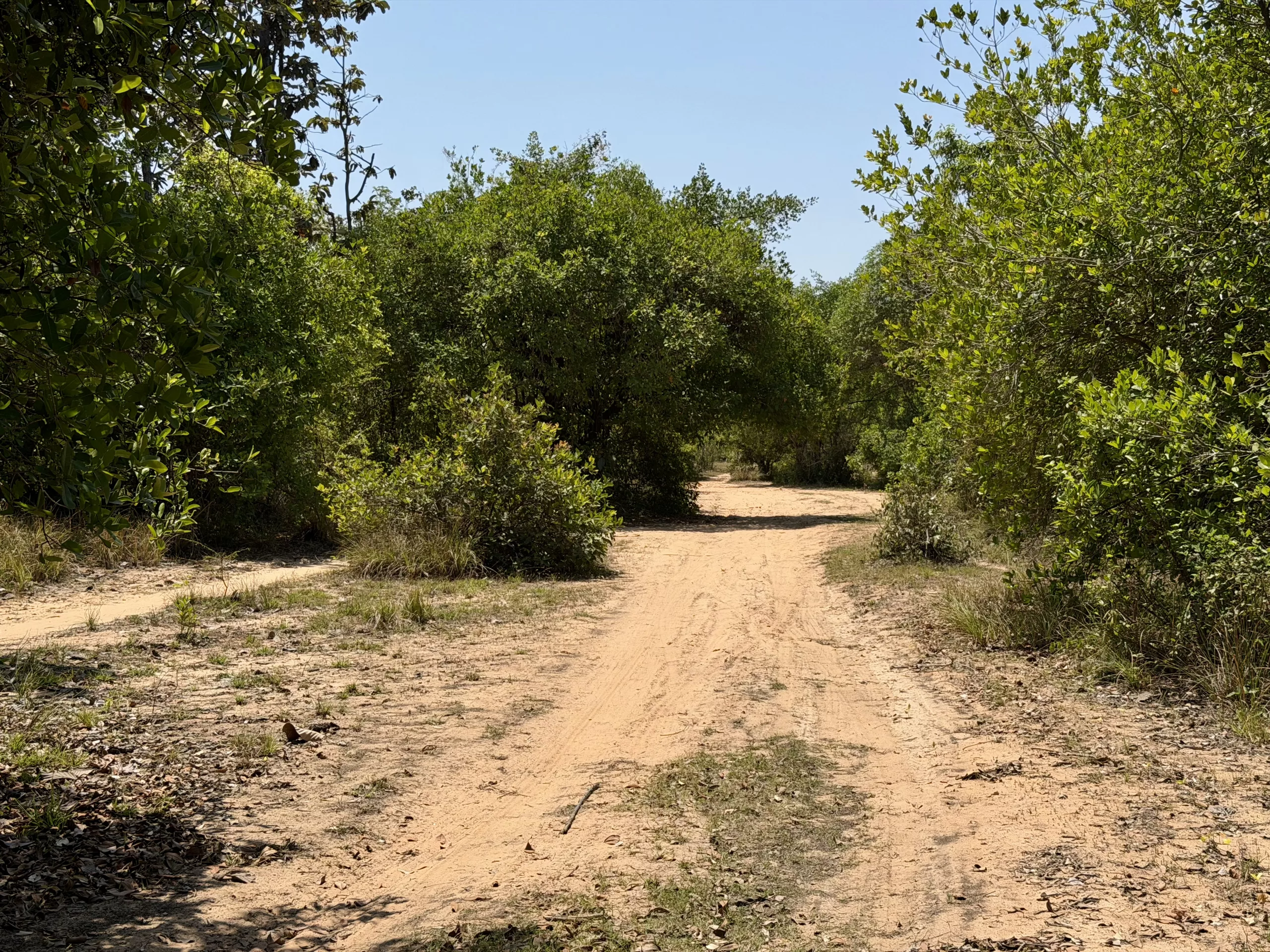
The closer I moved towards the Mun River, the softer the terrain became until the gravel slowly transformed into sand, and then into deep sand, and then into the kind of sand that makes your brain immediately start questioning all your life decisions while the front wheel begins wandering around like a drunk tourist searching for his hotel at three in the morning.
Now I have to admit honestly that deep sand is still not exactly my favourite riding surface because riding sand always feels slightly unnatural at first, especially when every instinct in your body screams at you to slow down while the correct solution is actually the complete opposite, meaning you need to stay loose, keep momentum and trust the motorcycle even while it feels like the entire front end is trying to escape sideways into the bushes.
Fortunately the Honda CRF is almost unfairly good for this type of terrain because the bike is so lightweight and forgiving that even when the rider is making questionable decisions the motorcycle somehow keeps smiling and carrying on anyway, unlike larger adventure bikes which can quickly become exhausting monsters in soft sand once things start going wrong.
For navigation on this trip I decided to use Guru Maps in bicycle mode, which sounds slightly ridiculous at first until you realise that bicycle navigation avoids highways and instead tries to connect tiny roads, village tracks and forgotten pathways together in ways that normal vehicle navigation would never even consider.
And surprisingly, it works brilliantly.
The app constantly pushed me onto tiny gravel connectors, sandy riverside roads and weird little local paths that made the ride feel much more adventurous than simply following standard roads between towns.
The only downside became obvious after a while.
Bicycles apparently do not require petrol.
After around 160 kilometres of riding, with nearly eighty percent of the route being off-road on gravel and sand, I suddenly realised the fuel situation was becoming slightly concerning because the map continued showing endless dirt roads and villages while somehow avoiding every single petrol station in existence.
Normally this would not be a huge problem in Thailand because fuel is usually available almost everywhere, even if it is just little glass bottles of petrol sold outside tiny family shops, but recently the fuel situation had become less predictable because of the ongoing chaos triggered by the war Trump started with Iran, which had affected prices and availability in different parts of the country.
So now the ride had gained a new layer of excitement because besides trying not to crash in deep sand, I also needed to avoid becoming stranded somewhere in rural Isaan looking like an overheated idiot pushing a motorcycle through buffalo country.
And the heat by that point had become absolutely brutal.
Thirty-six degrees in Thailand does not feel like thirty-six degrees in Europe or Australia because the heat here wraps around your body like a hot wet blanket while the sun attacks from above with enough force to cook eggs directly on the fuel tank.
Sweat poured continuously into my eyes, dust stuck to every exposed piece of skin, my boots felt like portable ovens and my riding gear slowly transformed into a mobile sauna.
Eventually I rolled into Ubon Ratchathani looking like somebody who had just escaped from a desert rally after several days without sleep, hydration or common sense.
The first stop was naturally fuel because priorities matter in life.
Luckily a PTT station appeared exactly when needed, saving both the ride and my increasingly nervous calculations about remaining range.
And then something beautiful happened.
Right next to the petrol station stood a hotel.
At that exact moment I honestly would have paid good money simply to lie down inside a refrigerator for half an hour, so the decision was very easy and I checked into UR Hotel almost immediately.
Nine hundred baht for the cheapest room was not exactly budget backpacker pricing by Isaan standards, but after spending the day being slowly grilled alive by the Thai summer sun it felt worth every single baht the second the cold air conditioning hit my face.
The only slight downside was that the poor CRF had to sleep outside without roof cover while I relaxed inside under glorious air conditioning, drank huge amounts of cold water and slowly recovered enough energy to become human again.
And honestly, despite the heat, despite the sand and despite the slightly chaotic fuel situation, it had been an absolutely brilliant day because this type of riding reminds you why small motorcycles and dirt tracks are still one of the best ways to experience Thailand properly.
Not through tourist attractions.
Not through fancy resorts.
But through forgotten tracks, riverside villages, random encounters and landscapes that most visitors will never even realise exist.
Day 2 — Ubon Ratchathani to Khong Chiam
16.03.2026
The second morning started much smarter than the first one because after nearly melting the previous afternoon I had finally relearned an important lesson about riding motorcycles in Thailand during hot season: if you sleep too long, the sun wins.
So this time I rolled out already at 7 am while the air still felt cool enough to enjoy riding without immediately sweating through every layer of clothing within the first ten minutes.
The original plan for the day looked relatively short with only around 120 kilometres planned towards Khong Chiam, but the challenge was that much of the route existed more in imagination and satellite imagery than in actual official maps because Guru Maps only allows routing on recognised roads, while rural Thailand often operates according to completely different rules where locals simply create their own tracks whenever they need them.
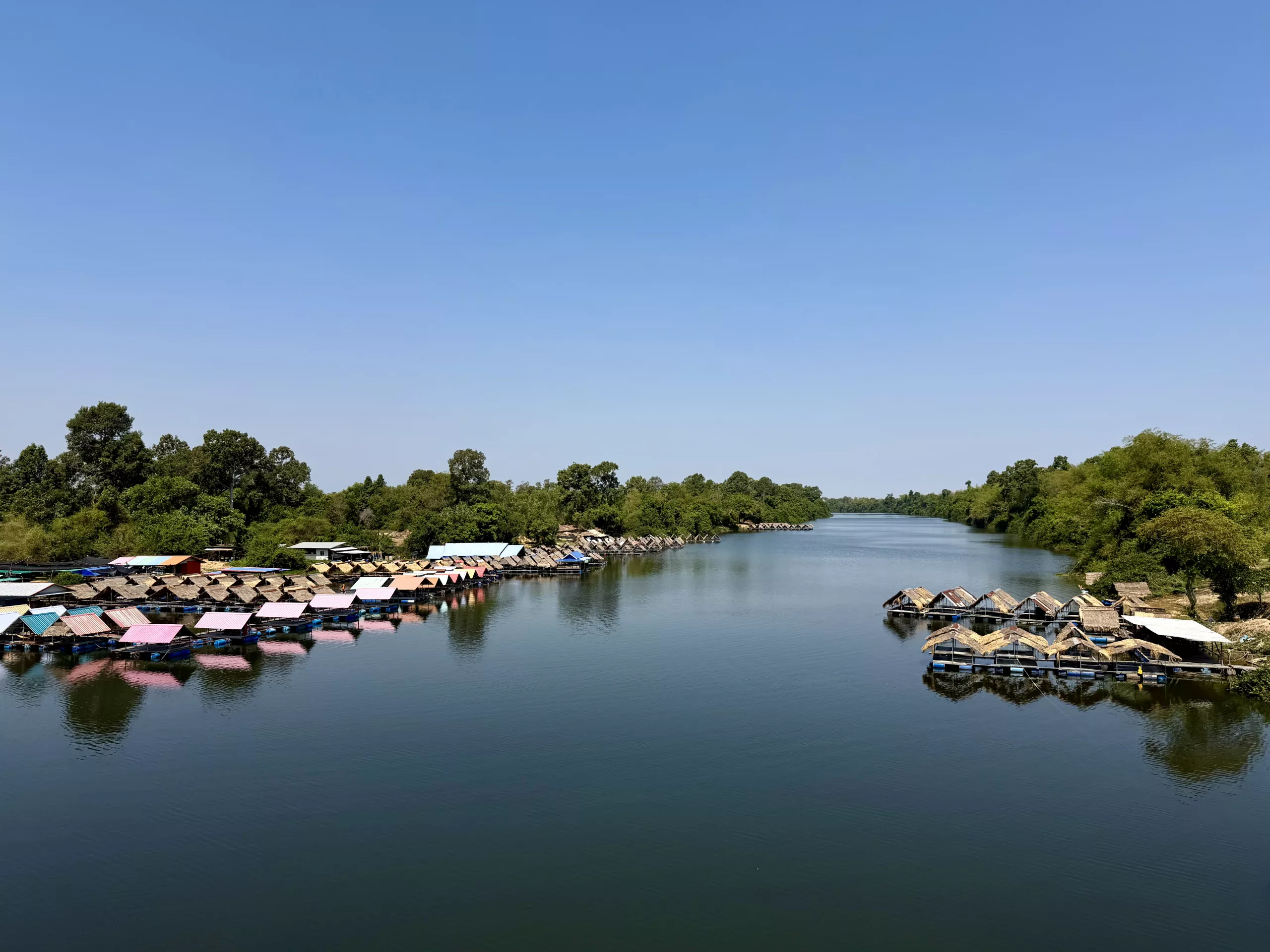
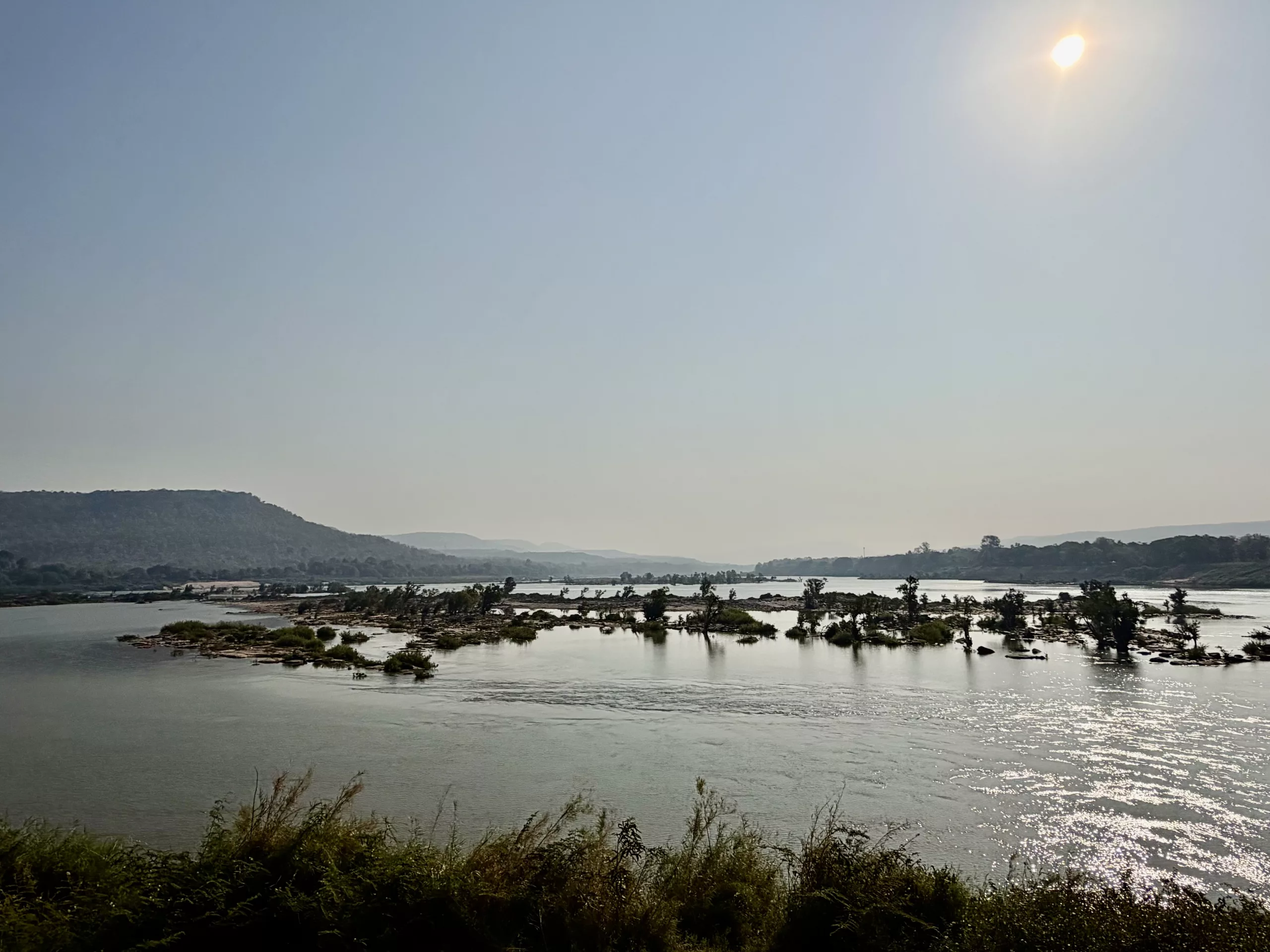
Almost immediately after leaving Ubon I was back on dirt roads running along the Mun River, with soft morning light reflecting off the water while fishermen prepared their boats and small villages slowly woke up for another day of heat and dust.
The tracks became smaller and more interesting the further east I travelled, often turning into narrow sandy trails between trees or rough little connectors crossing dry farmland and riverbanks, while the map occasionally insisted that the road ahead no longer existed despite there clearly being tyre tracks continuing into the distance.
But this is exactly where travelling like this becomes exciting because once official navigation stops being reliable, instinct and curiosity take over.
Locals build tracks everywhere.
Farmers create shortcuts between fields.
Fishermen carve paths along riverbanks.
Buffalo leave trails through swampy terrain.
And somehow all these random little routes eventually connect together into a rideable network if you are patient enough to keep exploring.
This type of riding is physically and mentally exhausting in the best possible way because your brain never gets a chance to relax completely as you constantly search for the next possible route, analyse terrain conditions, balance through sand and ruts, avoid holes and occasionally make completely random navigation decisions based purely on intuition.
At one point the trail disappeared completely near a swampy area where according to the map absolutely nothing continued forward anymore.
No signs.
No obvious route.
Just mud, bushes and confusion.
Then I noticed buffalo tracks disappearing through the grass and thought to myself that buffalo are probably experts at crossing difficult terrain, so following them seemed like perfectly reasonable navigation logic at the time.
And somehow it worked.
The trail reappeared further ahead and the ride continued, although I am still not entirely sure whether following livestock counts as advanced adventure navigation or simply evidence of mild dehydration caused by too much sun.
Before lunch the riding remained fantastic with endless little single trails and sandy river paths keeping both the bike and rider constantly busy, but after the break the roads around Phibun Mangsahan became slightly less exciting with more tarmac and straighter sections, which naturally meant it was time to start searching for alternative routes again.
That is probably the part of this style of travelling I enjoy the most because instead of simply following the fastest road between two points, the real challenge becomes connecting those points using whatever strange rideable tracks exist in between, turning the entire ride into a constantly changing puzzle where every successful connection feels strangely satisfying.
Sometimes the tracks work perfectly.
Sometimes they disappear into rivers.
Sometimes they unexpectedly turn into deep sand.
And sometimes they lead directly into somebody’s backyard where confused chickens scatter in every direction while old villagers stare at you wondering how on earth you ended up there.
Slowly but steadily I continued making progress eastward until eventually the landscape began changing and the atmosphere of Khong Chiam appeared ahead, with its relaxed riverside vibe and the feeling that comes from being close to one of Southeast Asia’s great rivers.
I arrived around 2 pm, exactly according to the smarter heat-management plan this time, and immediately sorted the important priorities of adventure riding life: fuel for the bike, food for the rider and a proper wash for both machine and body after another day spent covered in dust and sweat.
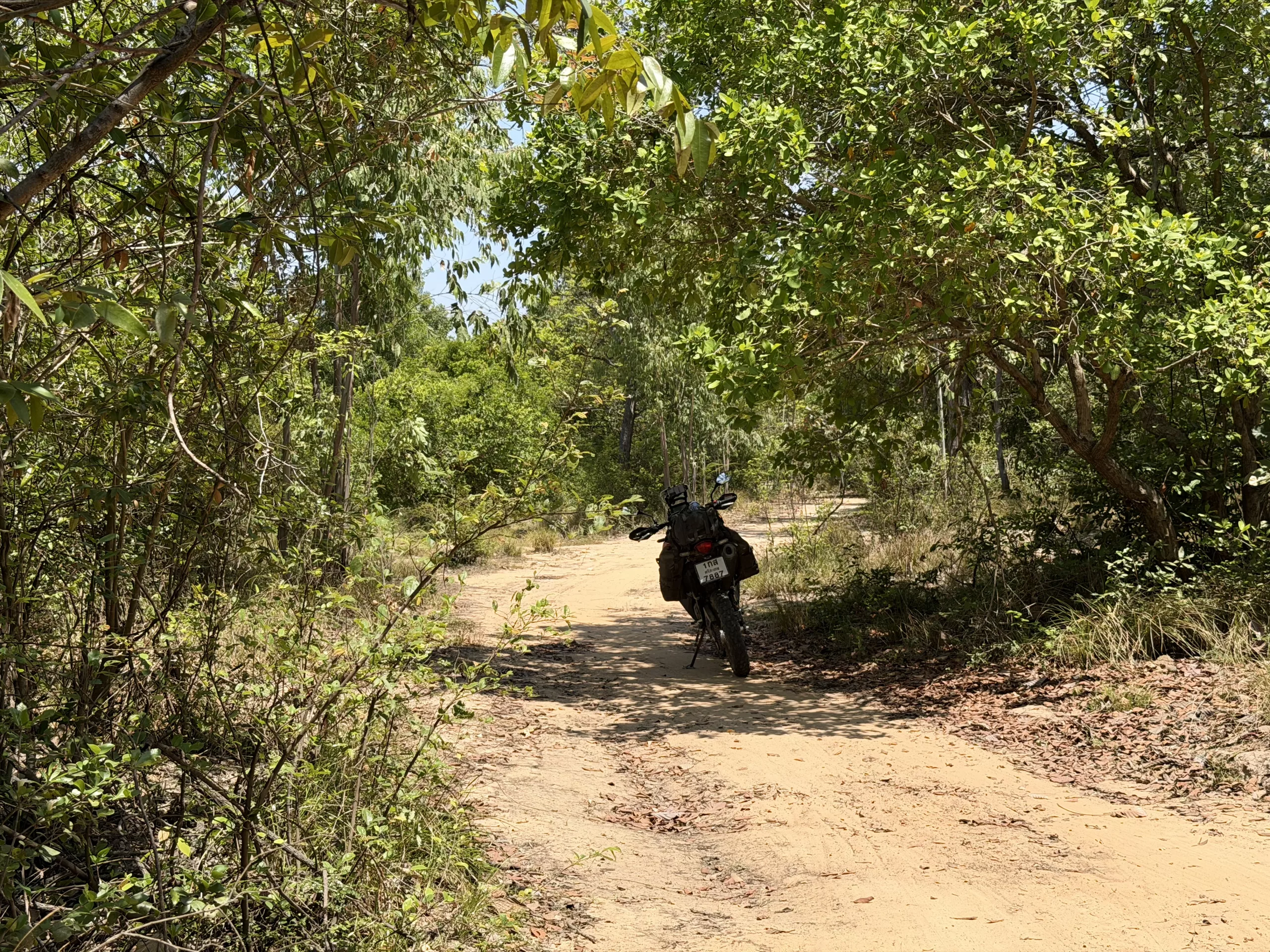
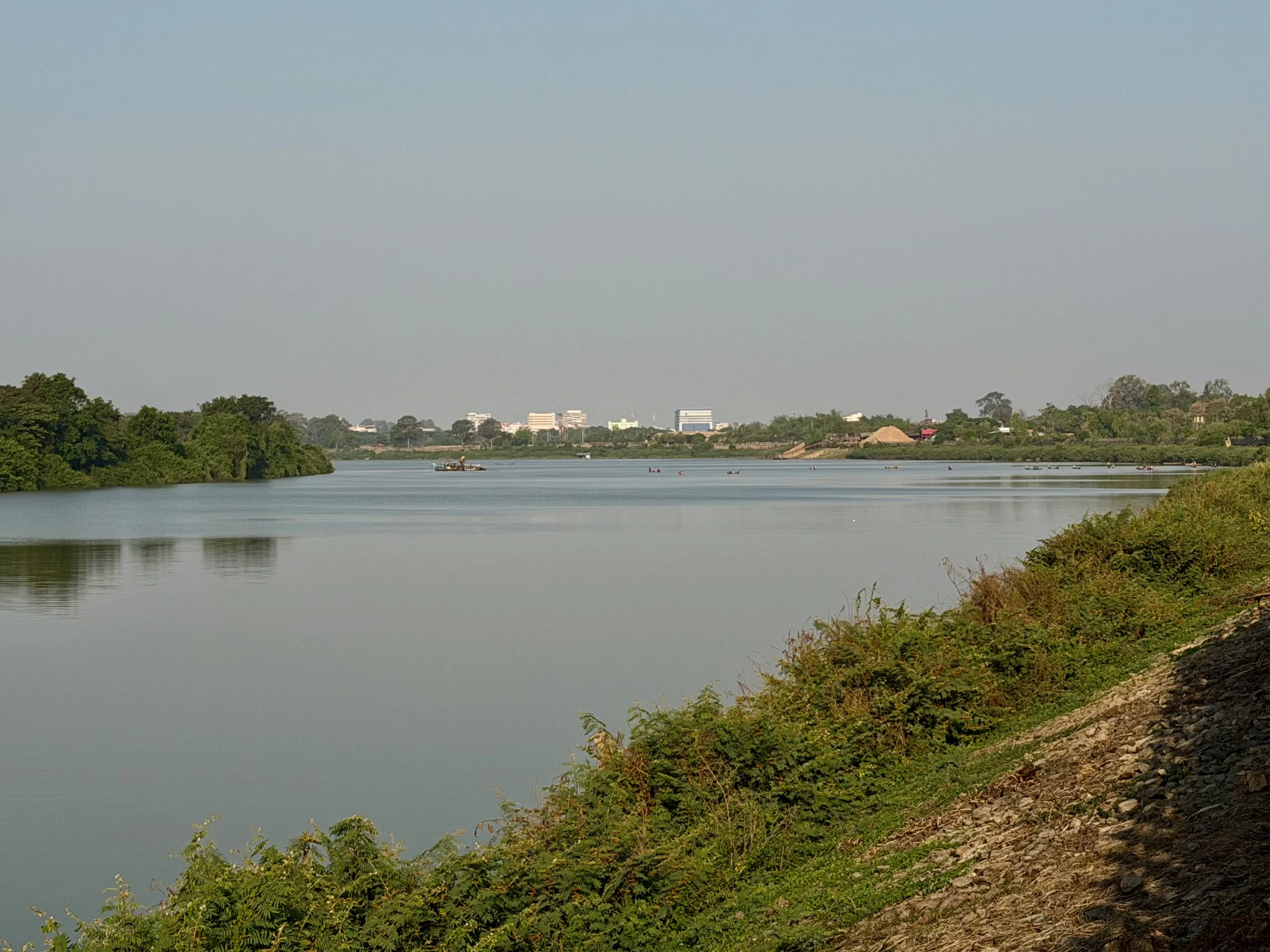
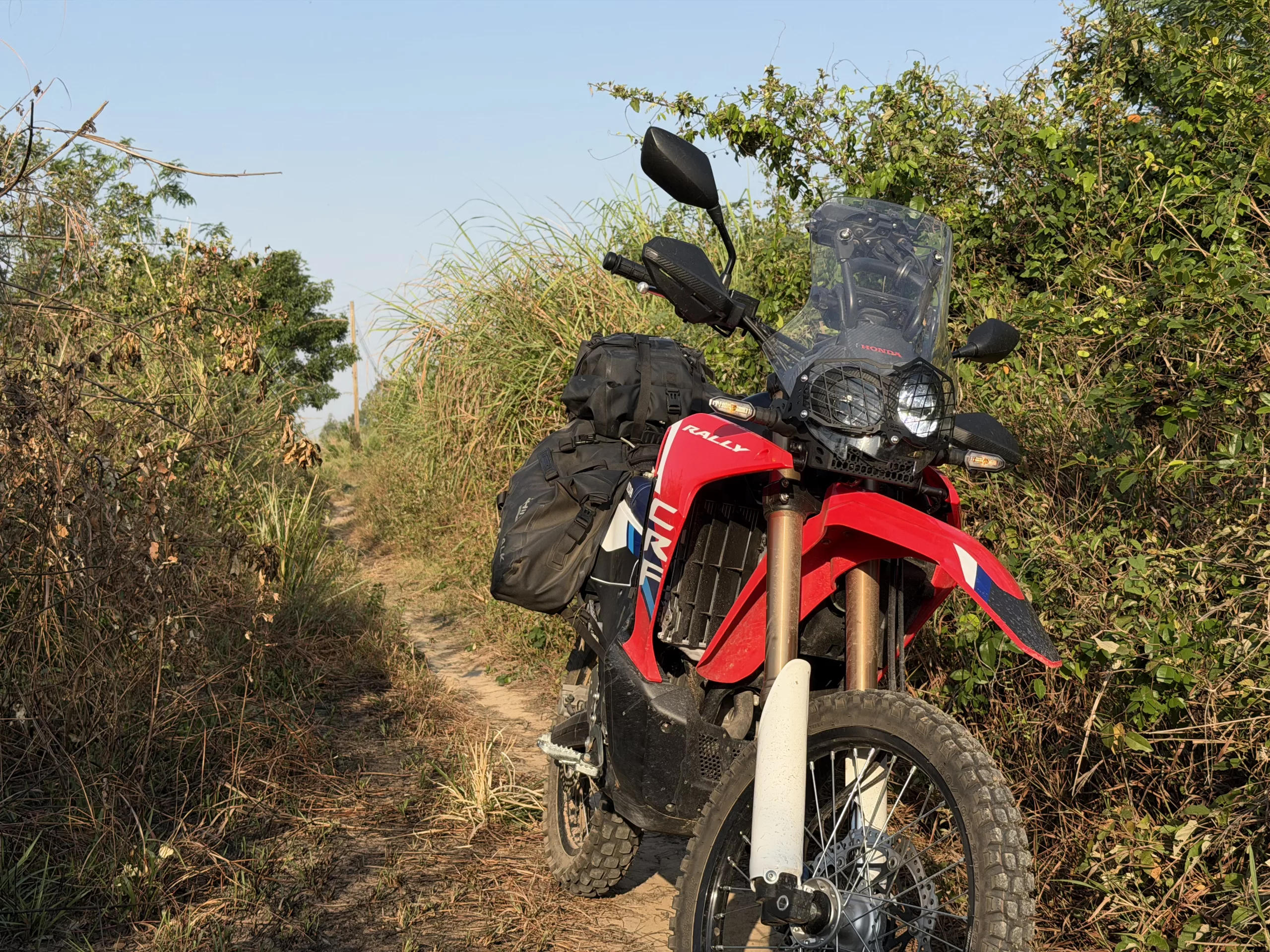
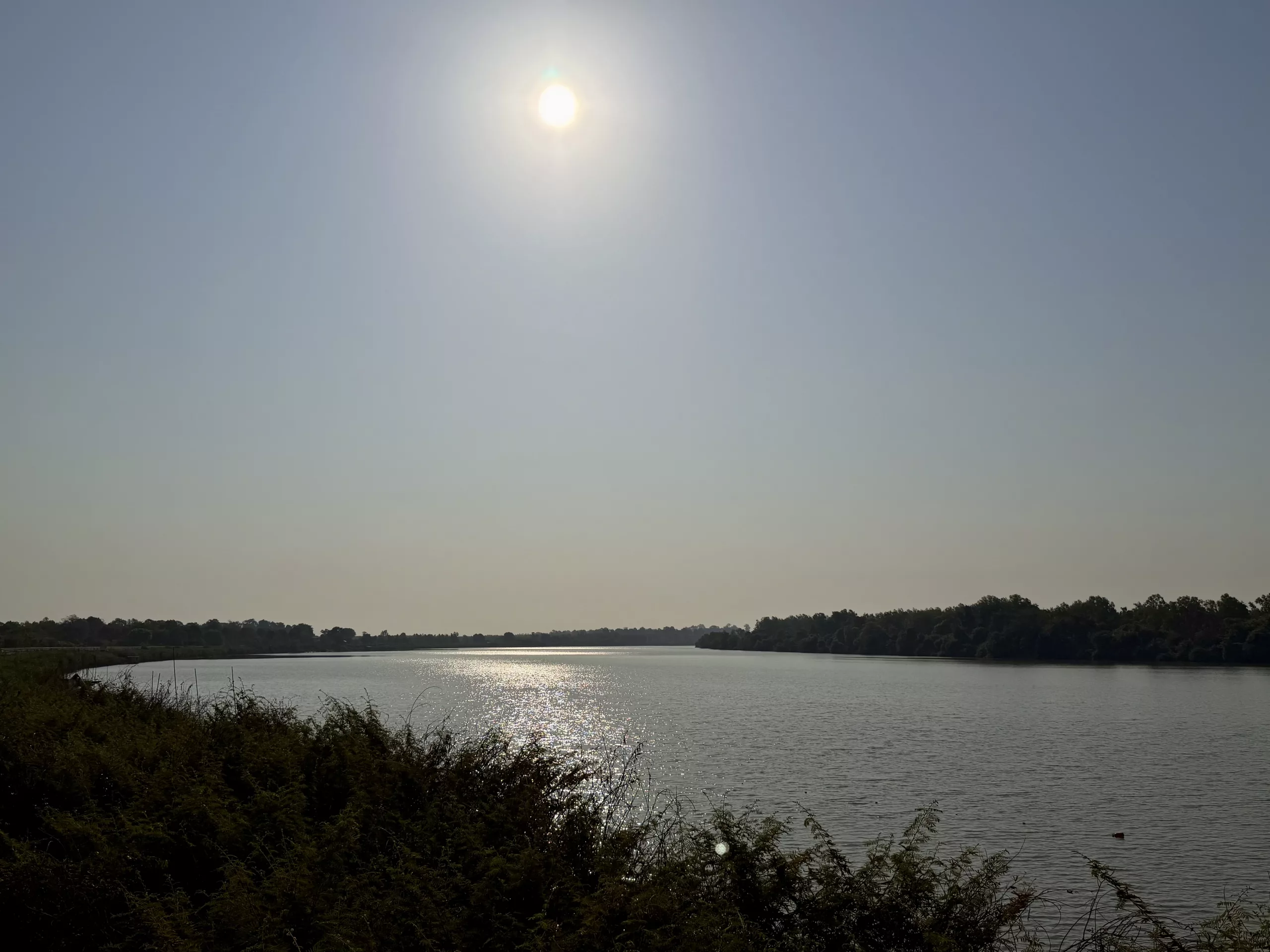
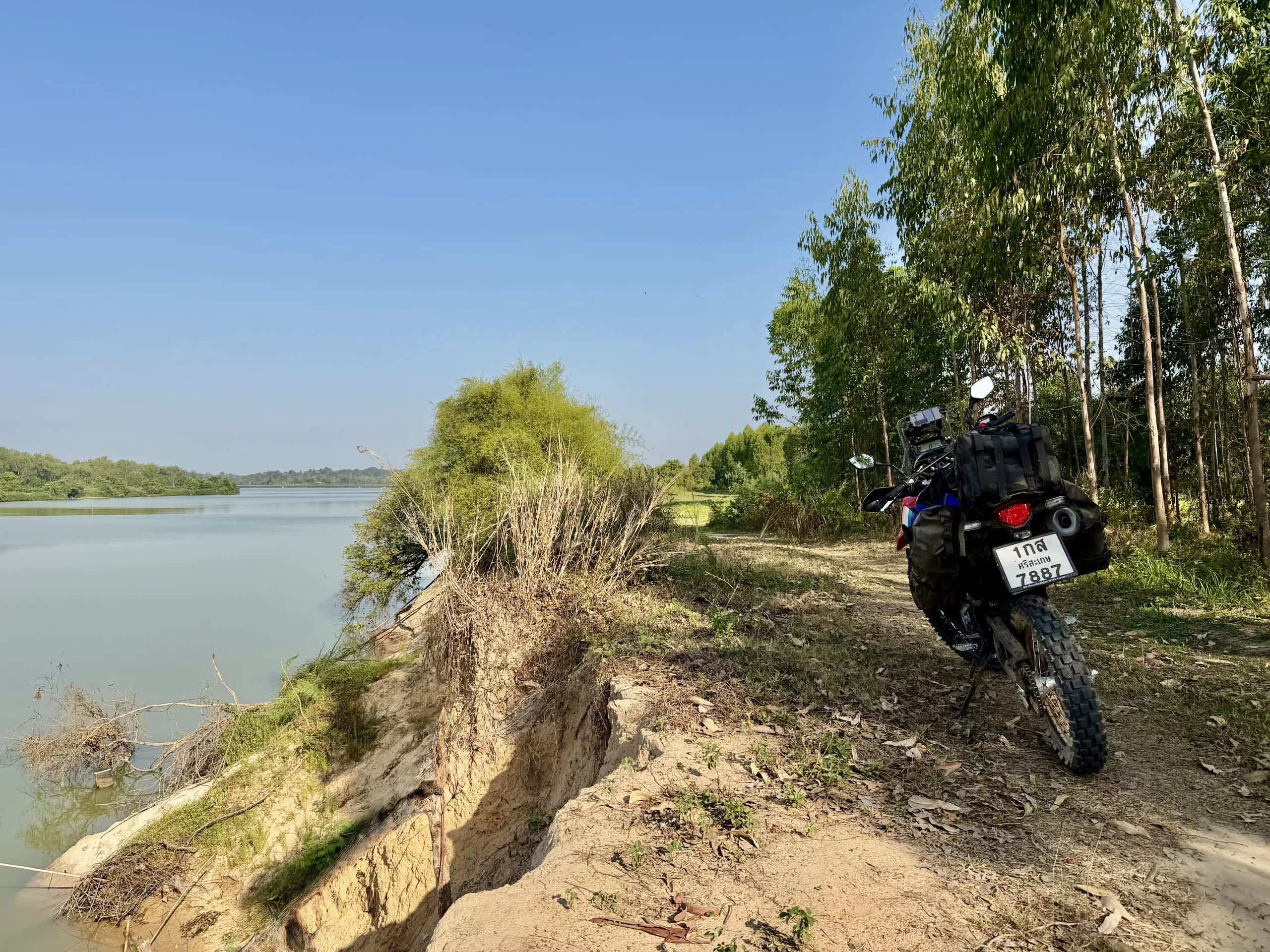
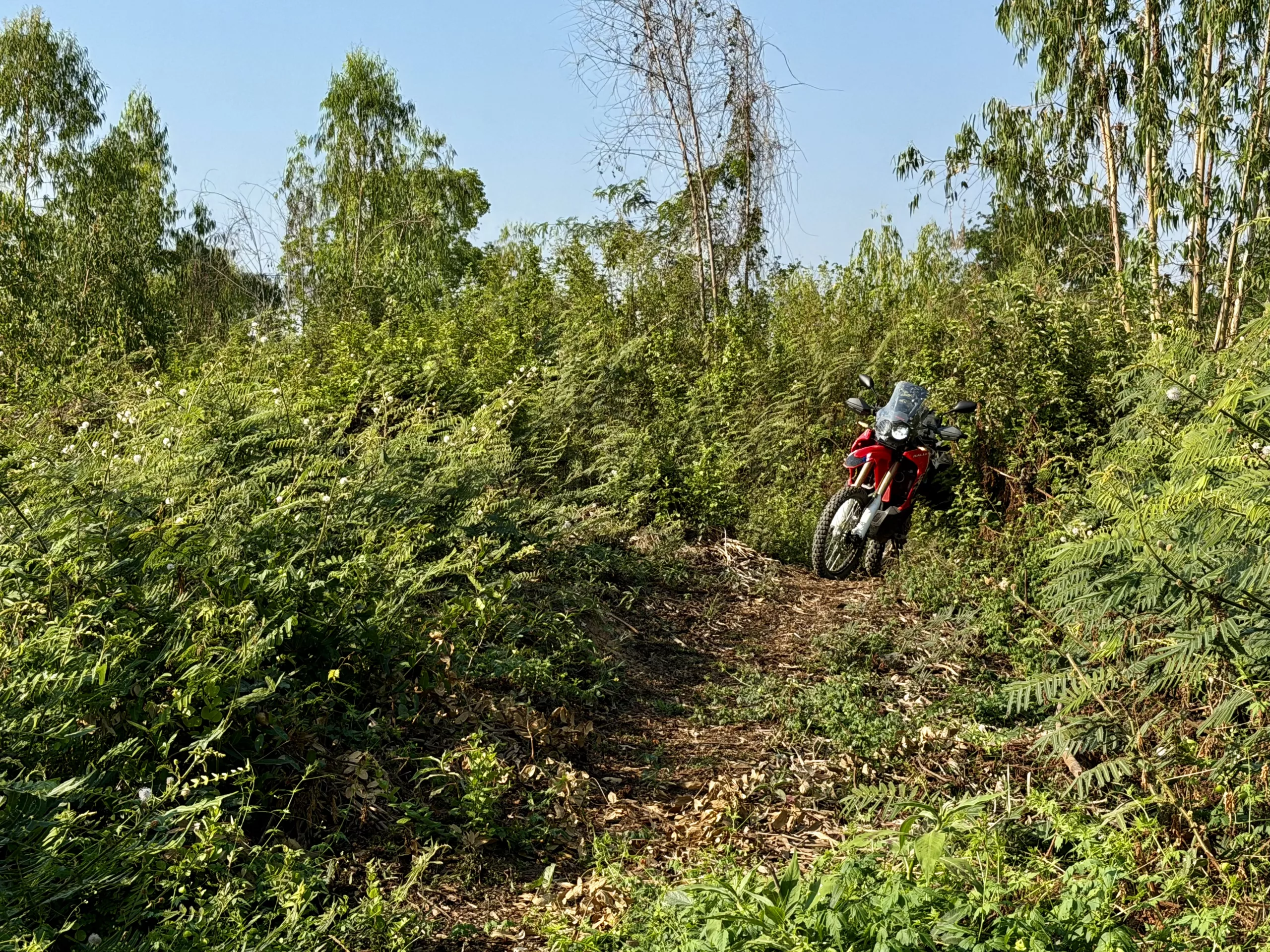
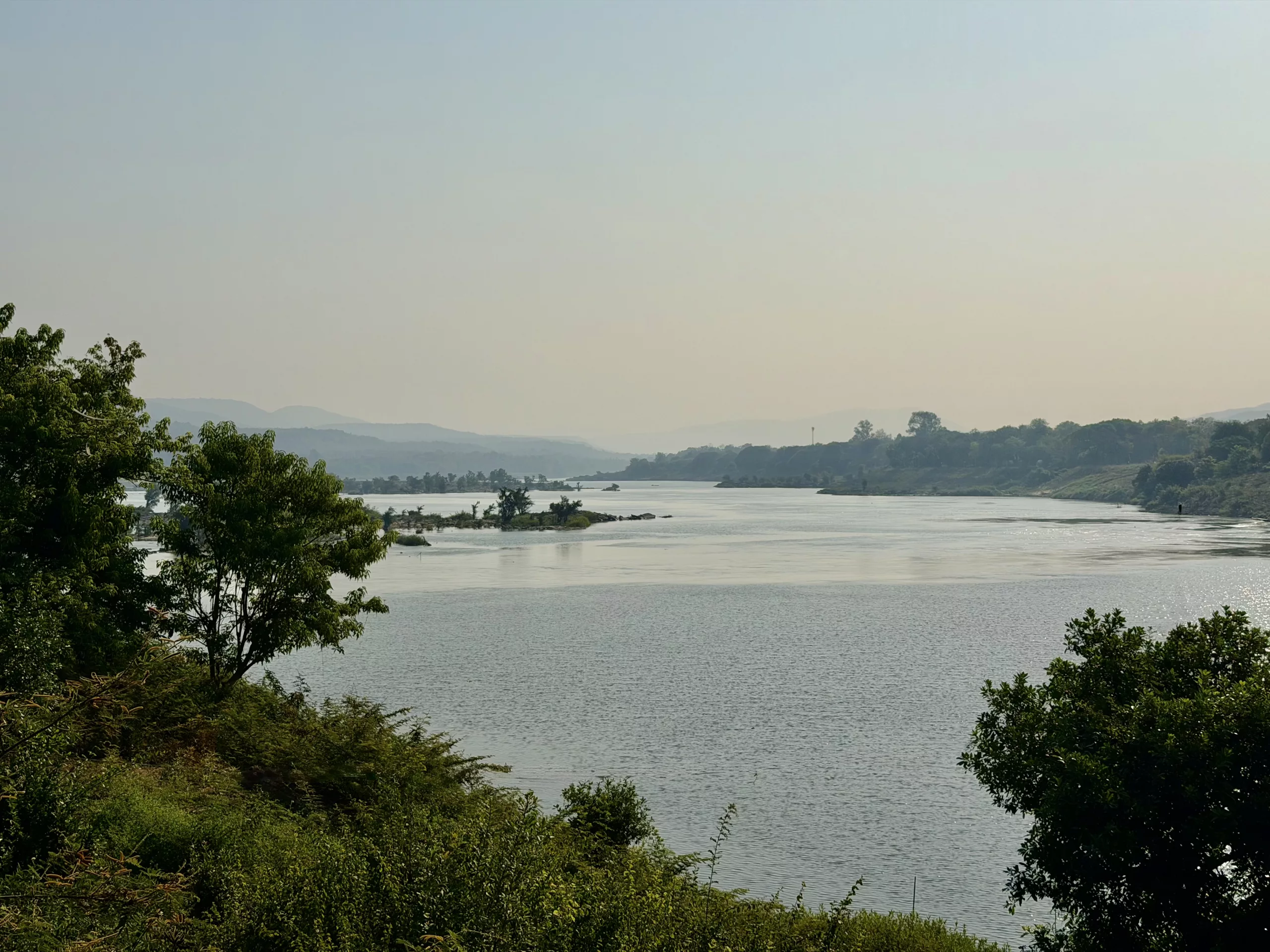
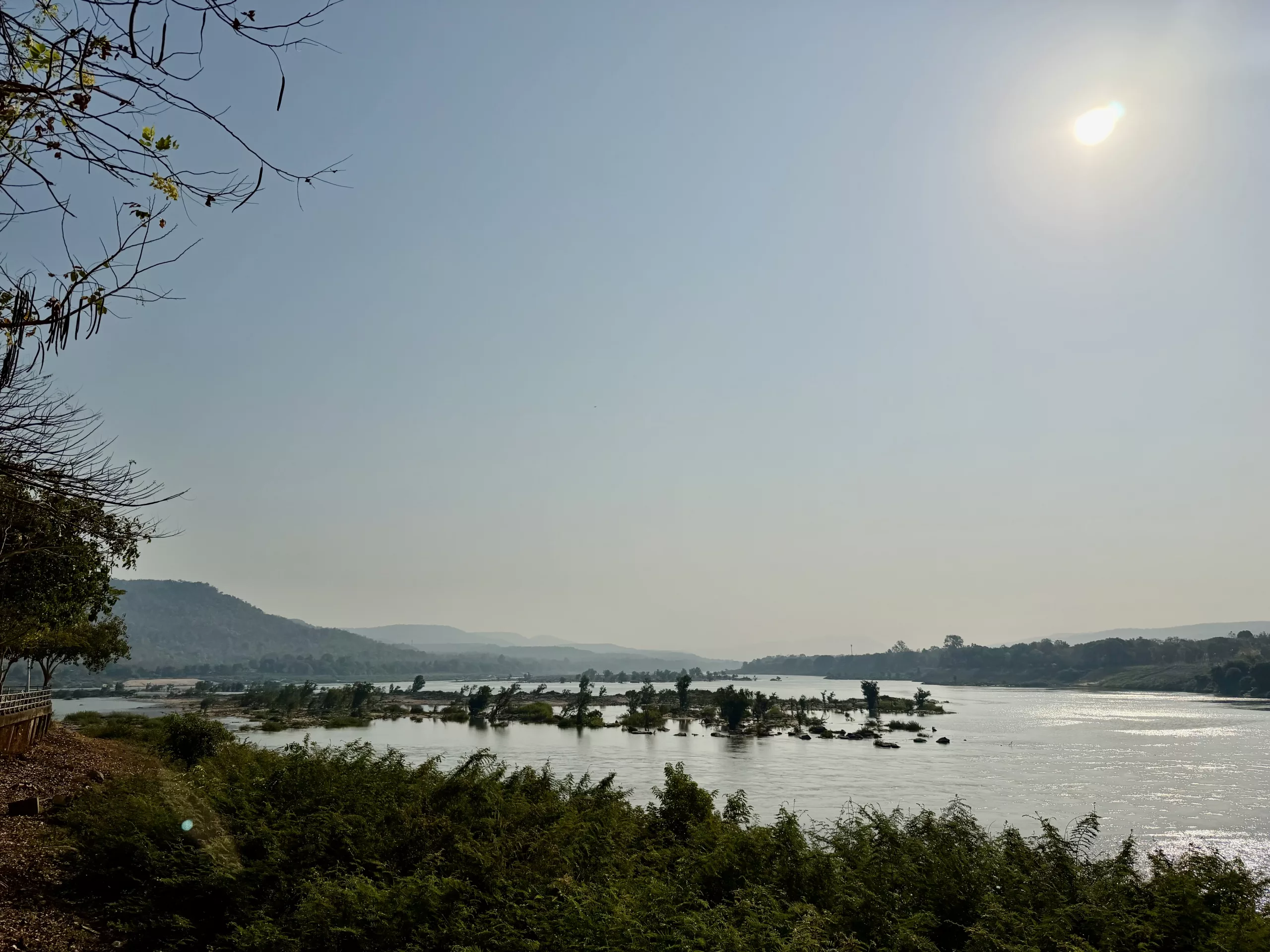
The CRF received a much-deserved cleaning at a local car wash after surviving gravel, sand, swampy tracks and buffalo navigation systems, while I found a cosy little room right in the centre of town close to food, which remains one of the most important requirements for happiness after long days riding in the Thai heat.
The final statistics for the day were around 120 kilometres with roughly seventy percent off-road riding on gravel, sand and narrow single trails, but numbers never really tell the full story because the real value of days like this lies in the small moments: the unexpected tracks, the villages, the river views, the constant problem-solving and the feeling of exploring places that exist completely outside normal tourism.
And once again the Honda CRF proved something very important.
You do not need a massive expensive adventure bike with endless electronics and enough horsepower to launch a small rocket into orbit.
You just need a reliable little motorcycle, some curiosity, a willingness to get slightly lost and enough optimism to follow buffalo tracks into the unknown while hoping they eventually lead somewhere useful.
#dustysocks


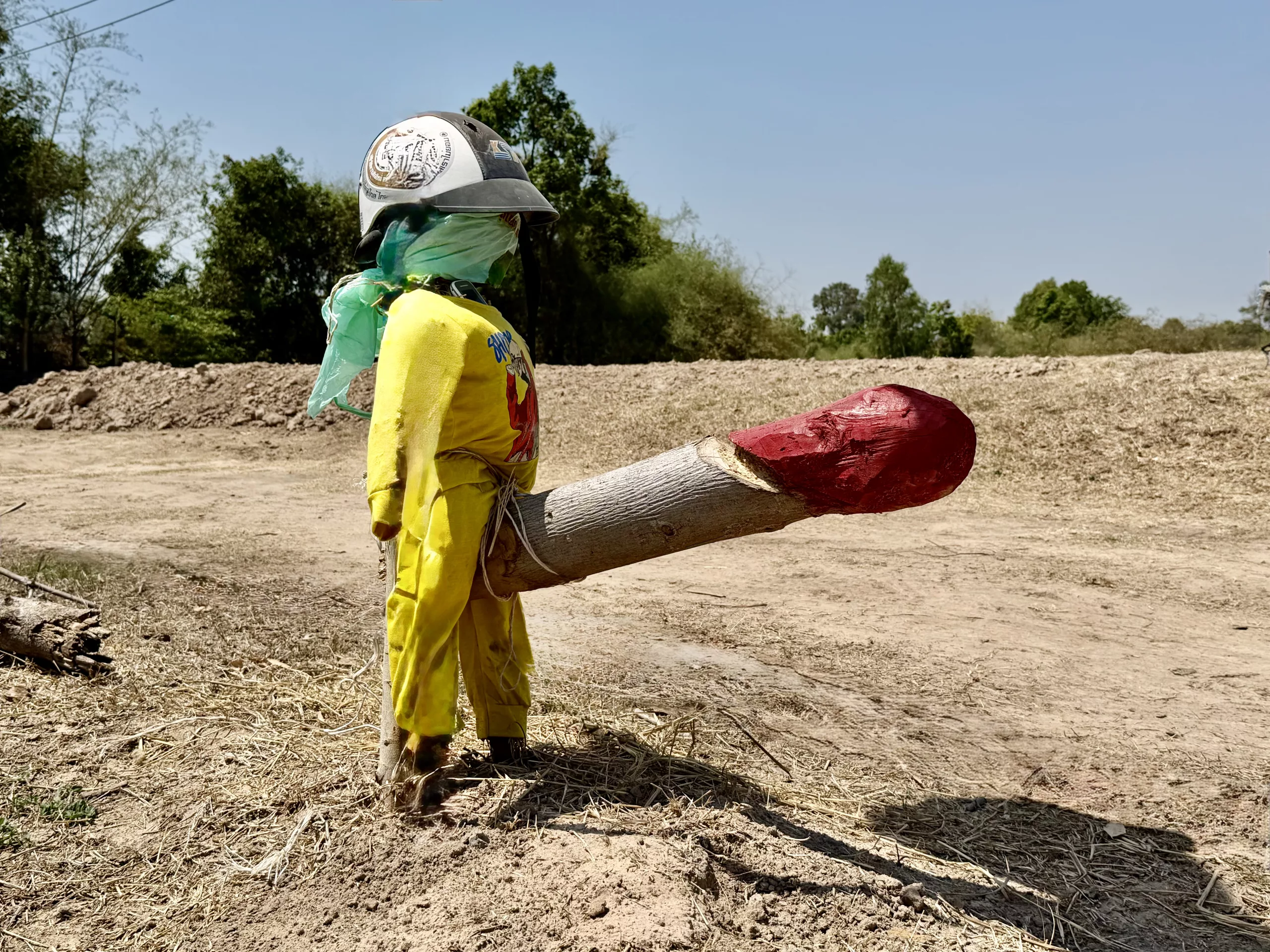
This is exactly natural rural Esarn
wish you all the best